18 November 2026 · Bearsource
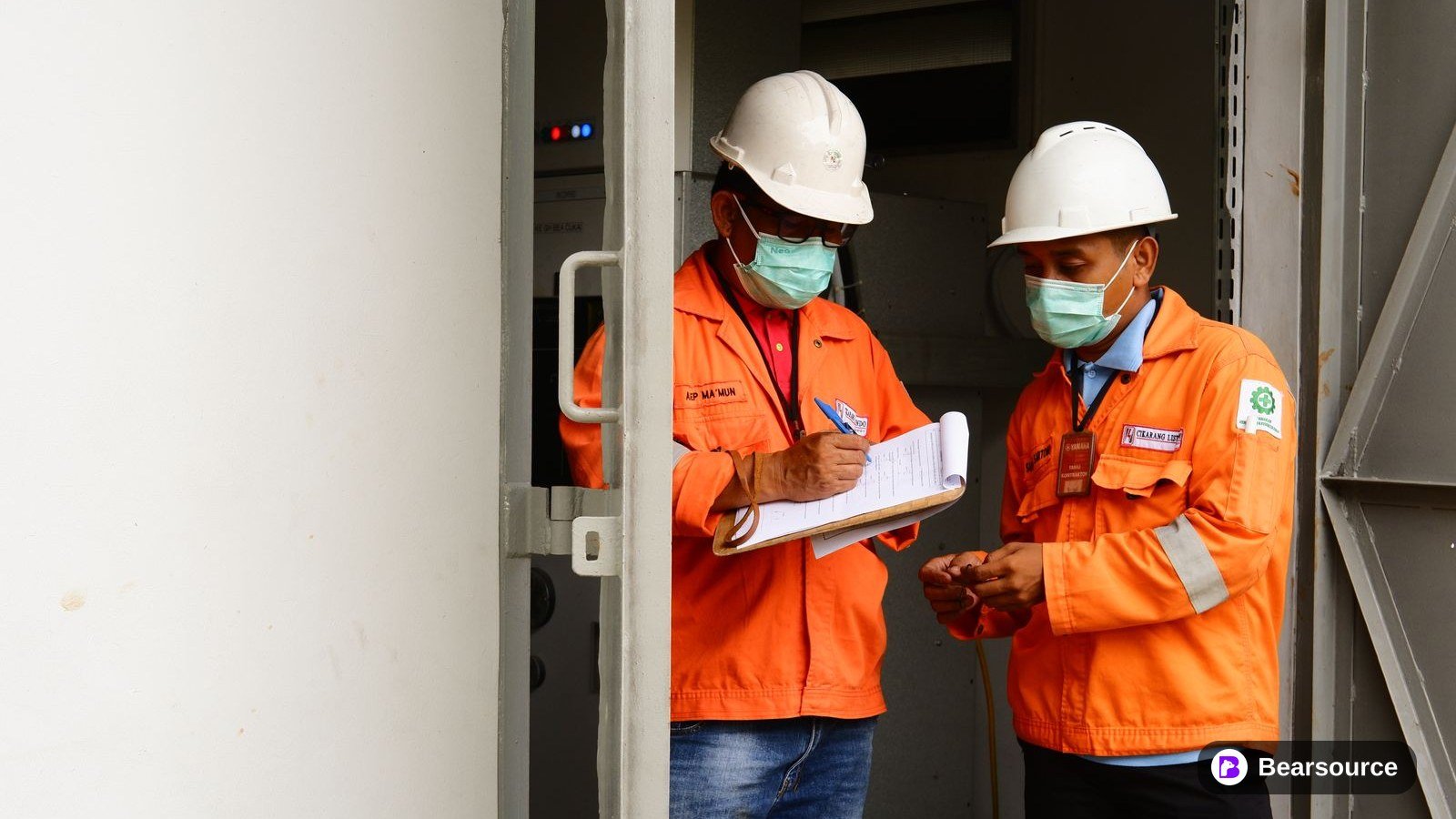
Your order is finished. The cartons are sealed, the container is booked, and the balance payment is due. Between you and a very expensive mistake stands one person with a clipboard, a tape measure and a sampling table. That's the pre-shipment inspection — the last check of your goods before they leave the factory, and the last moment fixing a problem is still cheap. Here's what actually happens on the day, and how the AQL numbers in the report decide whether your shipment passes or fails.
A real pre-shipment inspection (PSI, sometimes called a final random inspection) can only start when production is 100% complete and at least 80% of the goods are packed in export cartons. That isn't bureaucracy — the sampling math only works if the inspector can pull cartons at random from the whole finished lot. Inspect too early and you're checking the first, most careful part of the run, while the rushed tail end goes unseen.
There's a second inspection worth knowing: the during-production inspection (DUPRO), done when roughly 20–40% of the order has come off the line. It catches wrong materials, wrong colours and process problems while they can still be corrected — not after 10,000 units exist. New factory, new product, or a tight launch date? Book both. Stable repeat order with a proven factory? A solid PSI is usually enough.
The inspector arrives with your spec sheet, your approved "golden sample" and the purchase order. Then, roughly in this order:
Nothing in that list is negotiated on the day. The sample size and the pass/fail limits were fixed before the inspector arrived — by the sampling plan you're about to meet.
AQL — Acceptable Quality Limit — is the rule that turns "we checked some units" into a decision. It's a statistical sampling system (ISO 2859-1; ANSI/ASQ Z1.4 in the US) that answers two questions: how many units do we pull, and how many defects in that sample are too many?
Your order size points to a sample size. The default setting for most inspections is General Inspection Level II. For each defect class you set an AQL level — the common starting point is 0 for critical defects, 2.5 for major and 4.0 for minor. The standard's tables then give you an accept number (Ac) and a reject number (Re) per class:
| Order size (units) | Sample pulled | Major defects (AQL 2.5) | Minor defects (AQL 4.0) |
| 1,201 – 3,200 | 125 | accept ≤ 7 · reject at 8 | accept ≤ 10 · reject at 11 |
| 3,201 – 10,000 | 200 | accept ≤ 10 · reject at 11 | accept ≤ 14 · reject at 15 |
| 10,001 – 35,000 | 315 | accept ≤ 14 · reject at 15 | accept ≤ 21 · reject at 22 |
Take a 10,000-unit order. The inspector pulls 200 units at random. Find 10 major defects and the lot passes — just. The 11th major defect fails the entire shipment. Minors are more forgiving: 14 allowed, the 15th fails it. And a single critical defect fails the lot immediately, whatever the other counts say.
Two misunderstandings to avoid. First, AQL 2.5 does not mean "2.5% of my order is allowed to be broken." It's a decision rule applied to a sample — a passed lot can still contain some defective units, which is why your spec and golden sample matter as much as the number. Second, AQL is a setting, not a law of nature. For children's products, electrical goods and anything safety-relevant, tighten it: critical stays at zero, and many buyers set major at 1.0 or 1.5. The levels are agreed with the factory in writing before production starts — never invented by the inspector on the day.
Every defect found is sorted into one of three classes. The class decides which counter it goes on, so the definitions are agreed with the factory in advance:
The arguments happen at the borders — is that scratch major or minor? Experienced buyers keep a defect reference list with photos for their product, agreed with the factory before the first order. It's a close cousin of a problem we've covered before: the golden sample was perfect, but production wasn't.
You should have the report the same day, and it should read like evidence, not a verdict:
A report that says "quality good, shipment approved" over three smiling photos is not an inspection report; it's a postcard. And the factory's own QC report, however tidy, is the factory grading its own homework — useful information, not independent evidence. (It also sits at the end of a chain that starts much earlier: the factory audit before you ever place the order.)
A third-party pre-shipment inspection in China typically runs about US$100–300 per inspector-day, depending on the provider, the product and how far the factory is from the inspector's base. Most single-product orders take one day; a during-production visit costs roughly the same again. If a partner manages your production, inspections are normally part of that service rather than a per-visit add-on.
Set that against the alternative: one defective container discovered at your warehouse means returns, marketplace chargebacks, a blown launch window and possibly air-freighting replacements. The inspection is the cheapest line item in the whole order — it's just the one people skip because production "looked fine on the video call."
A failed inspection is not a disaster; it's the system working while there is still time. The usual options, in order: the factory reworks the defects and you re-inspect (at the factory's cost, if your agreement says so — write that in before production, not after a failure); a 100% sort focused on the defect that failed; or, rarely, shipping as-is with a price adjustment, only for minor-heavy failures you'd accept with open eyes. What you don't do is pay the balance and ship on a promise that it was fixed. No re-check, no shipment.
Is AQL 2.5 right for every product?
No — it's the common default for general consumer goods. Safety-relevant and children's products usually run tighter (major at 1.0–1.5, critical always zero), and cheap disposables sometimes looser. It's a commercial decision to make with full information, before production starts.
Can the factory's own QC replace a pre-shipment inspection?
It can complement one, not replace it. Their QC team knows the product, but your inspector works for you and grades against your spec — not against the factory's need to ship this week.
Do I need both a during-production and a pre-shipment inspection?
For a first order with a new factory or a new product, yes, if the order matters: the DUPRO fixes problems while they're cheap, the PSI verifies the final result. For stable repeat orders, PSI alone is the common pattern. (Separately, regulated products may also need lab testing — that's a different check again, covered in our product testing guide.)
Want the checking done properly on your next run? Inspections aren't an optional extra in our process — they're built into how production is run. BearSource is a production-management partner: we carry products from the first idea through development, production, quality control and shipment, and every order we manage is inspected against a written standard like the one above. Tell us what you're making, and we'll give you an honest read on how we'd run it.
