7 October 2026 · Bearsource
Every year, buyers wire deposits to factories they've never verified — and every year, some of those deposits buy nothing but lessons. A factory audit is the cheapest insurance in sourcing: one thorough check before money moves. Here's the exact 23-point checklist we run through before recommending any factory to a client.
A factory quote tells you what a supplier promises. An audit tells you what they can actually do — whether the company is real, whether the production line exists, whether anyone checks quality, and whether your deposit is safe. We've seen buyers lose $20,000 deposits to "factories" that were two people in a rented office. Every one of those losses was preventable with the checks below.
The checklist has five parts. Work through all of them before your first purchase order — and re-run the key ones once a year with existing suppliers, because factories change owners, lose staff, and quietly subcontract work you thought was in-house.
1. The business license is real and current. Ask for a copy of the 营业执照 (business license) and check the unified social credit code. The license should show registered capital, legal representative, and scope of business.
2. The name on the license matches who you're talking to. If the Alibaba storefront says "Shenzhen Bright Electronics" but the license says something entirely different, find out why before going further. Mismatched names are the single most common sign you're dealing with a middleman.
3. They can legally export. The factory should hold its own export license and customs registration — or name the licensed exporter they work through. If they can't explain how your goods clear customs, they haven't thought about it, which means you shouldn't either.
4. The factory address is on the license. A registered address in an industrial zone is good. A virtual office or residential address while production supposedly happens elsewhere is a question that needs an answer.
5. No major legal or blacklist history. Ask directly about disputes. Serious suppliers answer plainly; evasive ones are telling you something.
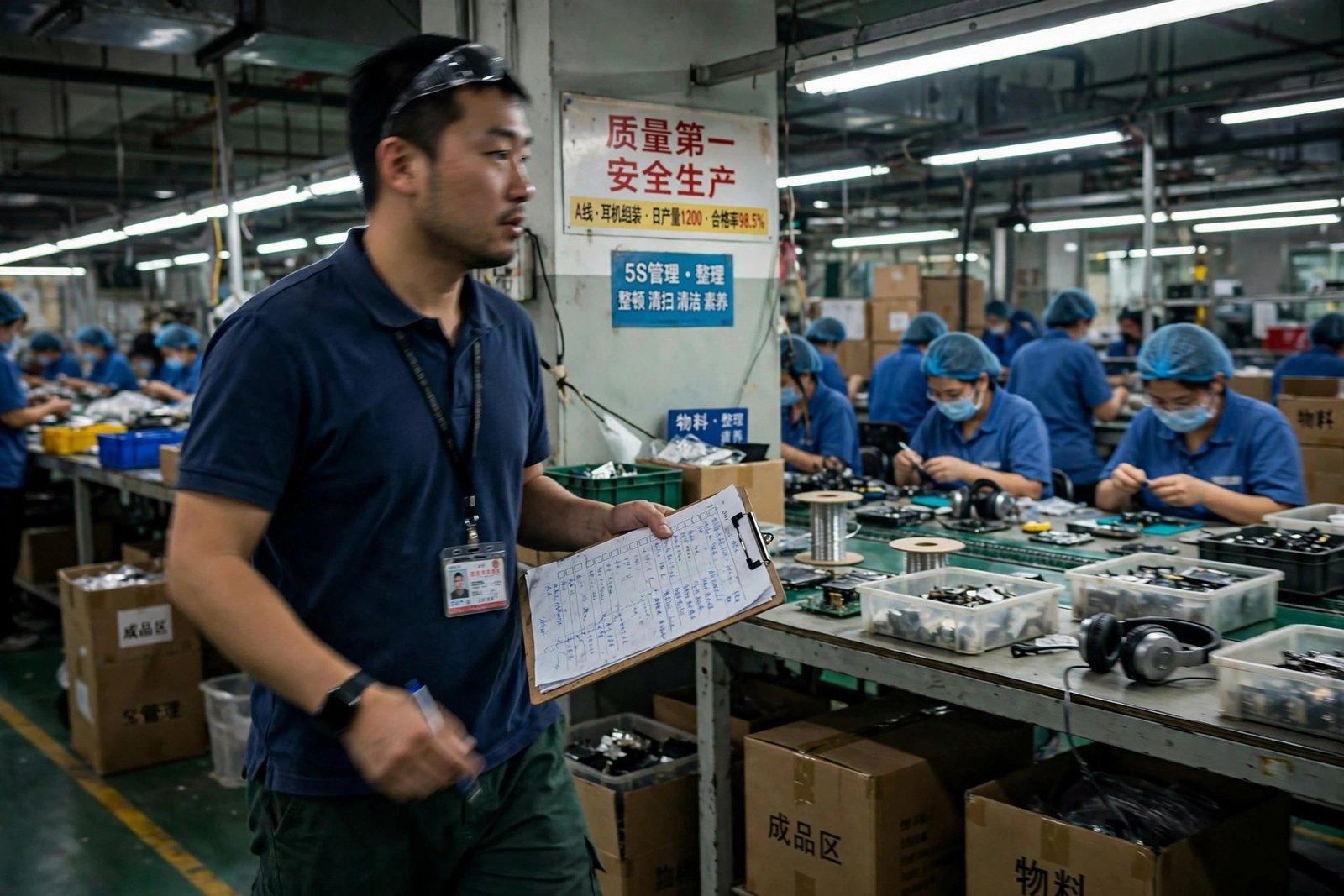
6. You see production — not a showroom. Insist on a live video walkthrough of the production floor, ideally unannounced or on short notice. A real factory shows you machines running. A trading company shows you a nice meeting room and sample shelves.
7. They're running your product category right now. A factory that makes phone cases can probably make your silicone kitchen tool — but the learning curve is yours to pay for. Prefer factories already producing in your category.
8. Key processes are in-house. Ask which steps they do themselves and which are subcontracted. Some outsourcing is normal (plating, specialized printing), but if everything critical leaves the building, you're auditing the wrong company.
9. Capacity fits your order. Your order shouldn't be more than ~30% of their monthly capacity (you'd own their schedule — and their problems), nor so small they forget you exist. Ask for current utilization directly.
10. The workforce looks stable. Ask about headcount and turnover. A floor full of trainees the week before your production run is a quality problem wearing a uniform.
11. Incoming material inspection (IQC) exists. Ask what happens when raw materials arrive. If the answer is "our supplier is reliable," there is no incoming inspection.
12. In-process QC checkpoints (IPQC). Quality can't be inspected in at the end — it has to be checked during production. Ask where the checkpoints are on the line and what gets measured at each.
13. Final inspection follows an AQL standard. AQL 2.5 for major defects and 4.0 for minor is the common bar for consumer goods. If the factory doesn't know what AQL means, their "final inspection" is someone glancing at boxes.
14. Dedicated QC staff. The production manager checking their own team's work is not quality control — it's a conflict of interest. Ask how many people do QC full-time and who they report to.
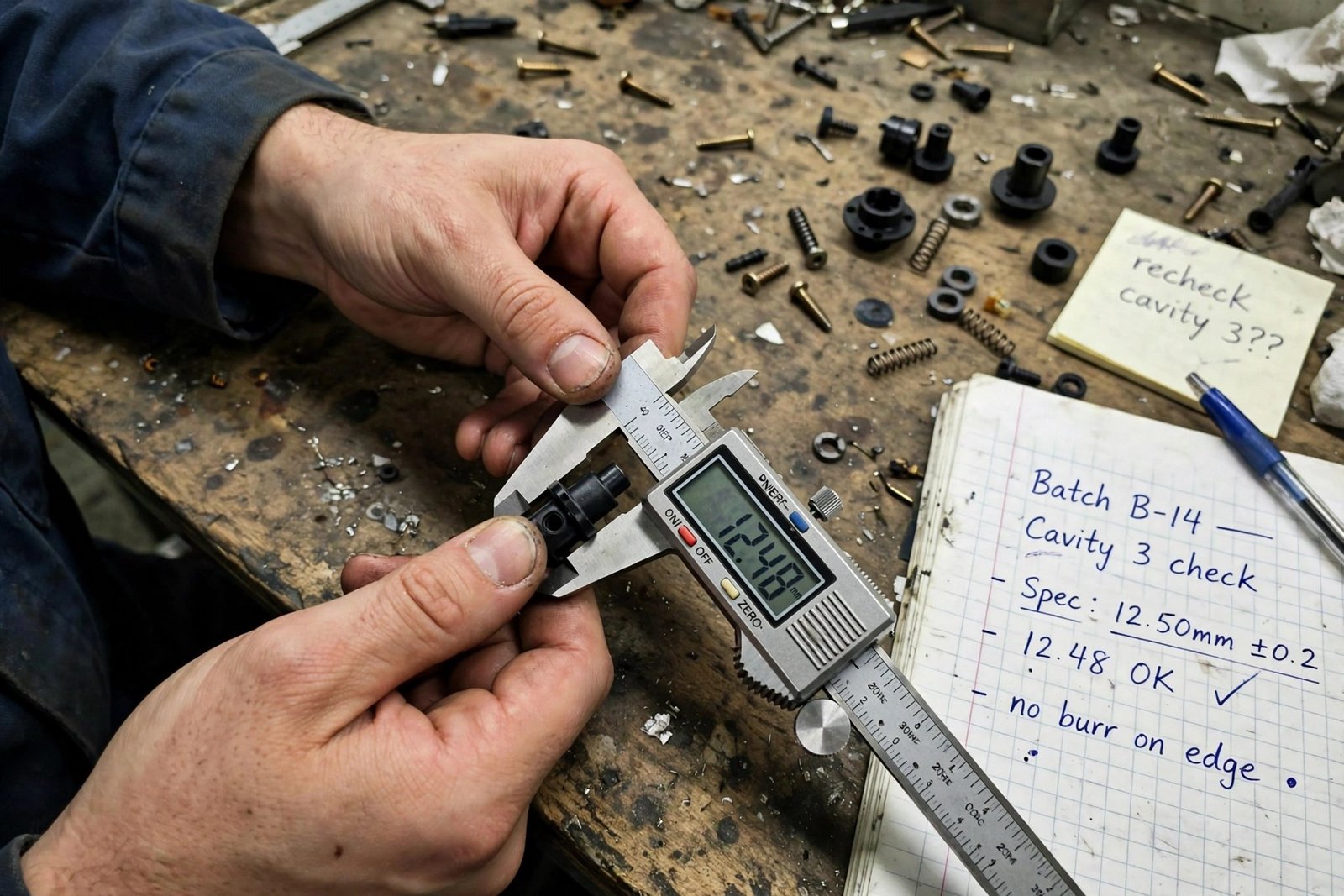
15. Measurement tools are calibrated. Calipers, gauges, test fixtures — ask when they were last calibrated. Uncalibrated tools produce confident, wrong numbers.
16. There's a documented rework process. Ask what happens to failed units. "We fix them" is not a process. You want to hear about segregation, root-cause notes, and re-inspection — because the alternative is failed units quietly going back in the box.
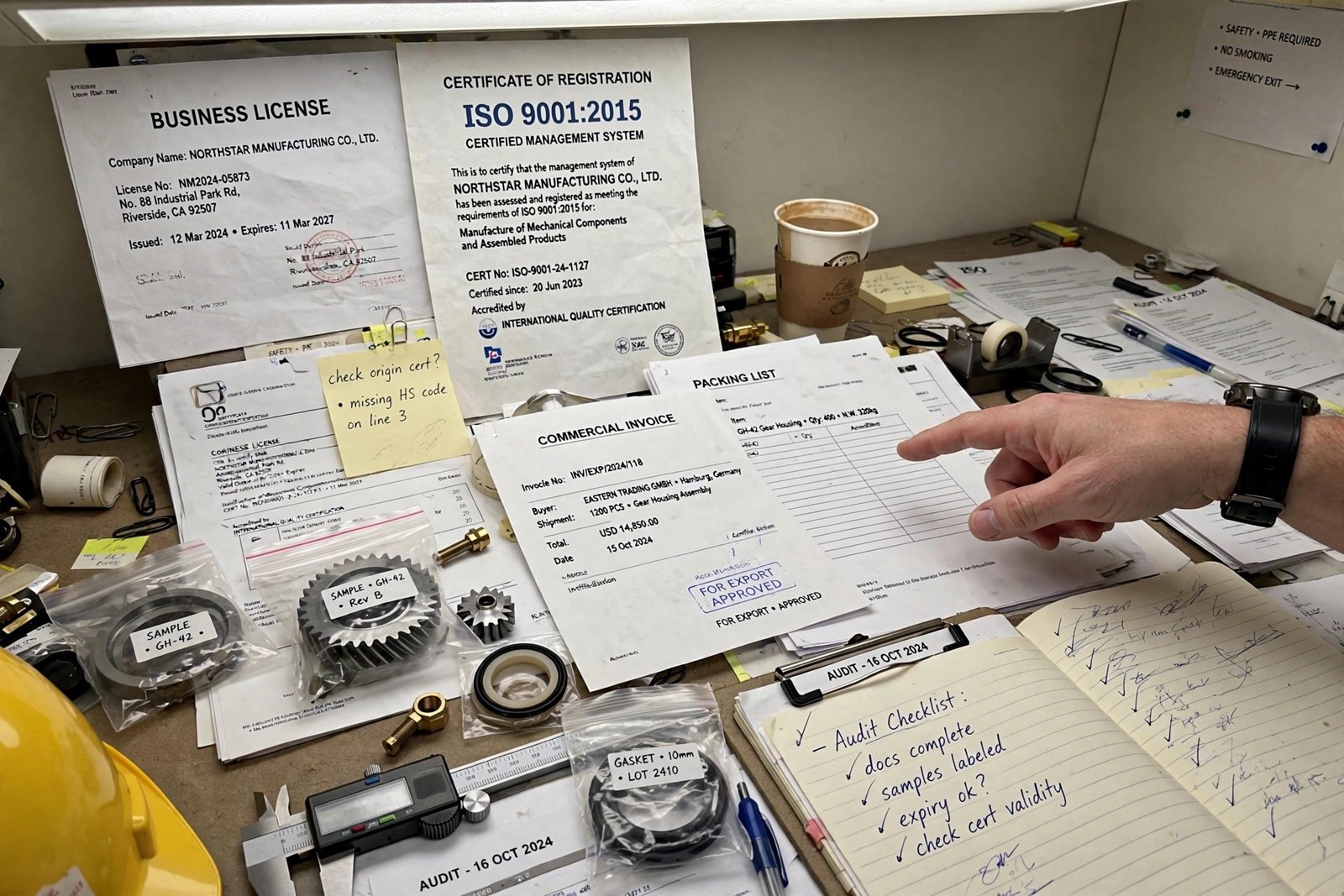
17. Product certifications are real — verify them. UL, CE, FCC, RoHS: don't accept the PDF at face value. Check the certificate number with the issuing body. Photoshopped certificates are common enough that verification should be routine, not paranoid.
18. ISO 9001 or equivalent — verified, not just claimed. Same rule. An ISO certificate on the wall means something only if the certifying body confirms it's current and covers the right scope.
19. Social and environmental compliance fits your market. Selling into the EU or to US retailers? Ask about labor, safety, and environmental practices now — not when your retailer's compliance team asks you.
20. Real customer references you can call. Ask for two or three buyers in your market — and actually call them. Ask what went wrong, not just what went right. Every factory has a bad week; you want to know how they handled it.
21. Communication is responsive and technically competent. During the audit process itself, notice: do they answer technical questions directly, or deflect? The audit phase is the honeymoon — communication only gets worse after the deposit.
22. Payment terms are standard. 30% deposit with 70% against bill of lading (or before shipment after inspection) is normal. Demands for 100% upfront are a walk-away signal, full stop.
23. Your IP is protected. They should sign an NNN agreement without drama — and you should check they're not running a competitor's near-identical product on the next line. A factory that makes your exact product for three other brands is a leak waiting to happen.
If you see any of these, stop the process — no checklist score can compensate:
A professional third-party audit in China typically runs $250–$400 per man-day, plus travel for factories outside the auditor's base city. For most buyers, one audit day before the first order is the highest-ROI money in the entire sourcing process — it protects a deposit worth 50–100x the audit fee.
You can also do a lighter version yourself: video walkthrough + document verification + reference calls covers perhaps 70% of the risk. What it can't replace is someone physically on the floor, opening the rework bin and asking uncomfortable questions. (We run factory audits across our network as part of every sourcing project — here's how we work.)
How much does a factory audit cost in China?
$250–$400 per auditor per day from established third-party firms, plus travel expenses for remote factory locations. Most single-factory audits take one day.
Can I audit a factory remotely instead of visiting?
Partially. A live video walkthrough plus document checks and reference calls catches the big frauds. But subcontracting, calibration, and rework-bin realities only surface in person. For first orders over ~$10,000, go in person or send someone.
What's the difference between a factory audit and a product inspection?
An audit evaluates the factory — its legitimacy, systems, and capability — before production. A product inspection evaluates your goods — during or after production. You need the audit first; the inspection catches what the audit couldn't predict.
How long does a factory audit take?
One full day on-site for a standard factory, plus report writing. Complex operations or multi-site suppliers can take two days.
Do I need to audit every supplier, or just new ones?
Audit every new supplier before the first order. Re-audit existing suppliers annually or when something changes — new ownership, a moved facility, or a sudden unexplained price drop.
About to place a first order with a new factory? Tell us what you're making — we'll verify the factory before your deposit leaves your account.
