20 October 2026 · Bearsource
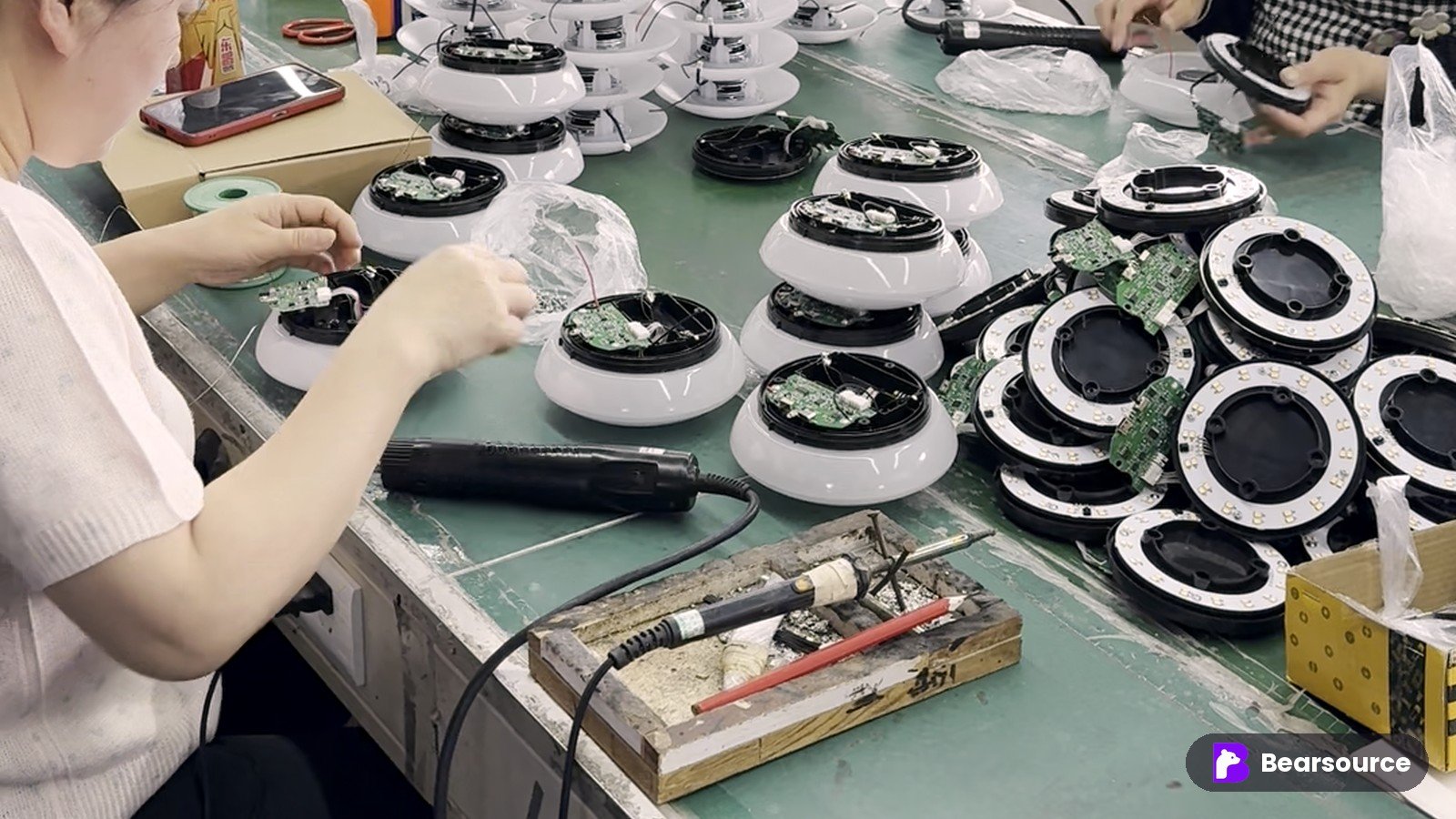
Here's a situation we see a lot. The product is made, the boxes are packed, and then Amazon or a retailer asks: "Can you send your test report?" Suddenly there's a lab bill, a delay, and sometimes a product that has to be changed.
The good news: most of this is predictable. If you know what your product needs before production starts, testing becomes a normal step in the plan, not an emergency.
This guide covers the most common cases for selling in the US. It's a starting point, not a full list. Rules depend on your exact product, so always check yours.
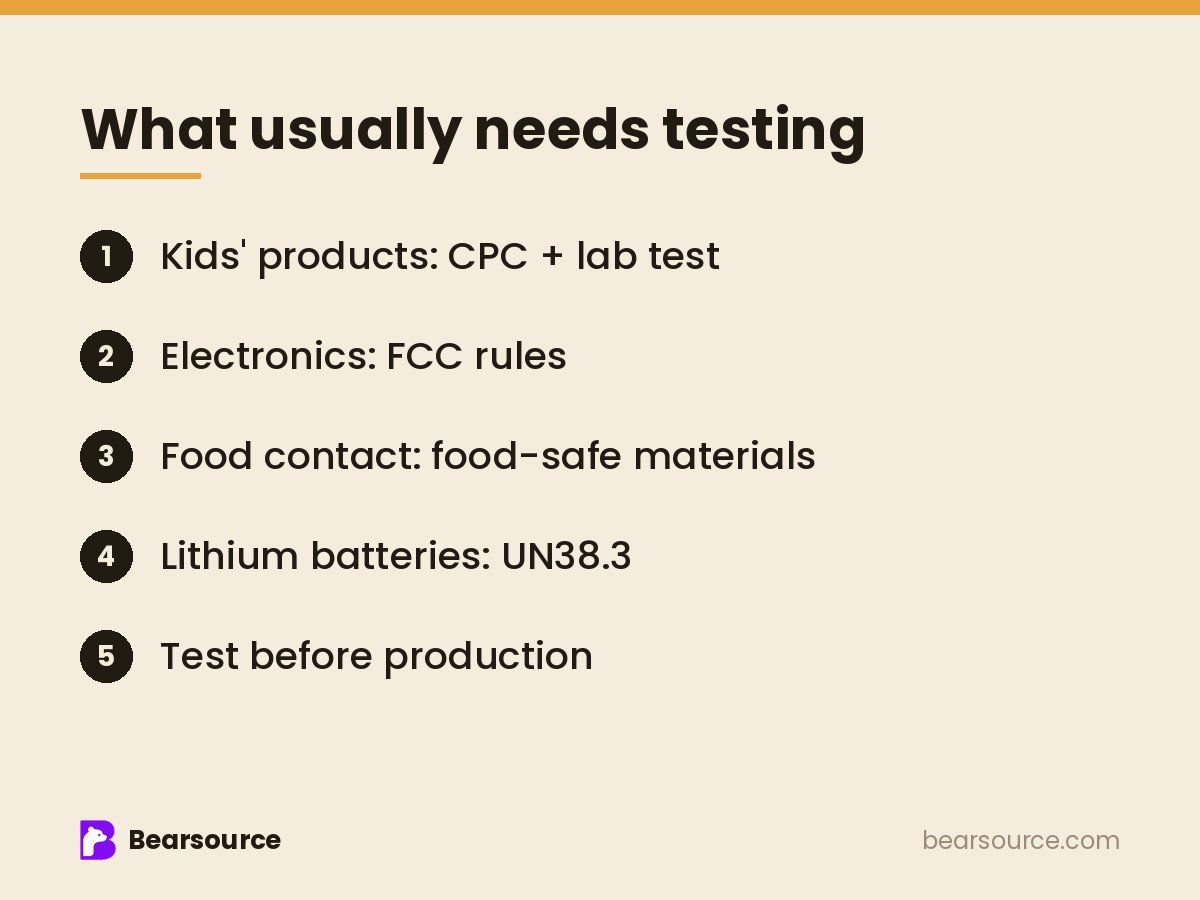
| Your product | What to look at |
|---|---|
| Made for kids (12 and under) | Third-party testing at a CPSC-accepted lab, plus a Children's Product Certificate (CPC) |
| Electronics | FCC rules. Products with Bluetooth or Wi-Fi need FCC certification; many others need a simpler declaration |
| Touches food or drink | Materials that meet FDA food-contact rules. If you sell in California, check Prop 65 too |
| Has a lithium battery | UN38.3 test summary to ship it, plus battery safety testing |
| Other general products | Some need a General Certificate of Conformity (GCC) if a CPSC rule applies |
If your product is designed mainly for children 12 and under (toys, kids' backpacks, children's clothing, even a kids' water bottle), US rules are strict. You usually need:
This is one of the most common surprises for founders who make "fun" products. Plan for it from the start.
Almost anything with a circuit board falls under FCC rules, which deal with radio interference.
Retailers and marketplaces often ask for safety testing too, especially for chargers and anything that plugs into the wall.
Tumblers, lunch boxes, kitchen tools: anything that touches food should be made from food-safe materials that meet FDA rules. Ask your factory for material reports early, and test finished products, not just raw materials. Coatings, paints and printing can change the result.
If you sell in California, check whether Prop 65 warnings apply.
Power banks, earbuds, smart gadgets: if there's a lithium battery inside, you'll need a UN38.3 test summary just to ship it by air or sea. Most marketplaces also ask for it. Battery safety testing is strongly recommended as well, and often required by retailers.
Ask for this early. A factory that can't show UN38.3 paperwork for its batteries is a red flag.
The expensive mistake is testing after the goods are made. If something fails then, you're fixing thousands of units instead of a few samples.
Independent, accredited labs do it, many with offices near factories in Asia. Your factory may have old reports, but make sure they match your product and materials. A report for "something similar" usually won't be accepted.
Testing isn't scary when it's planned. Find out what your product needs, build it into the timeline, and test before production, not after a buyer asks.
This is general information, not legal or compliance advice. Requirements change and depend on your exact product, so confirm with an accredited lab or compliance expert.
We manage your product from idea to delivery. That includes planning testing, working with labs and making sure the paperwork matches what was actually made. You bring the idea. We build the product.
