21 November 2026 · Bearsource
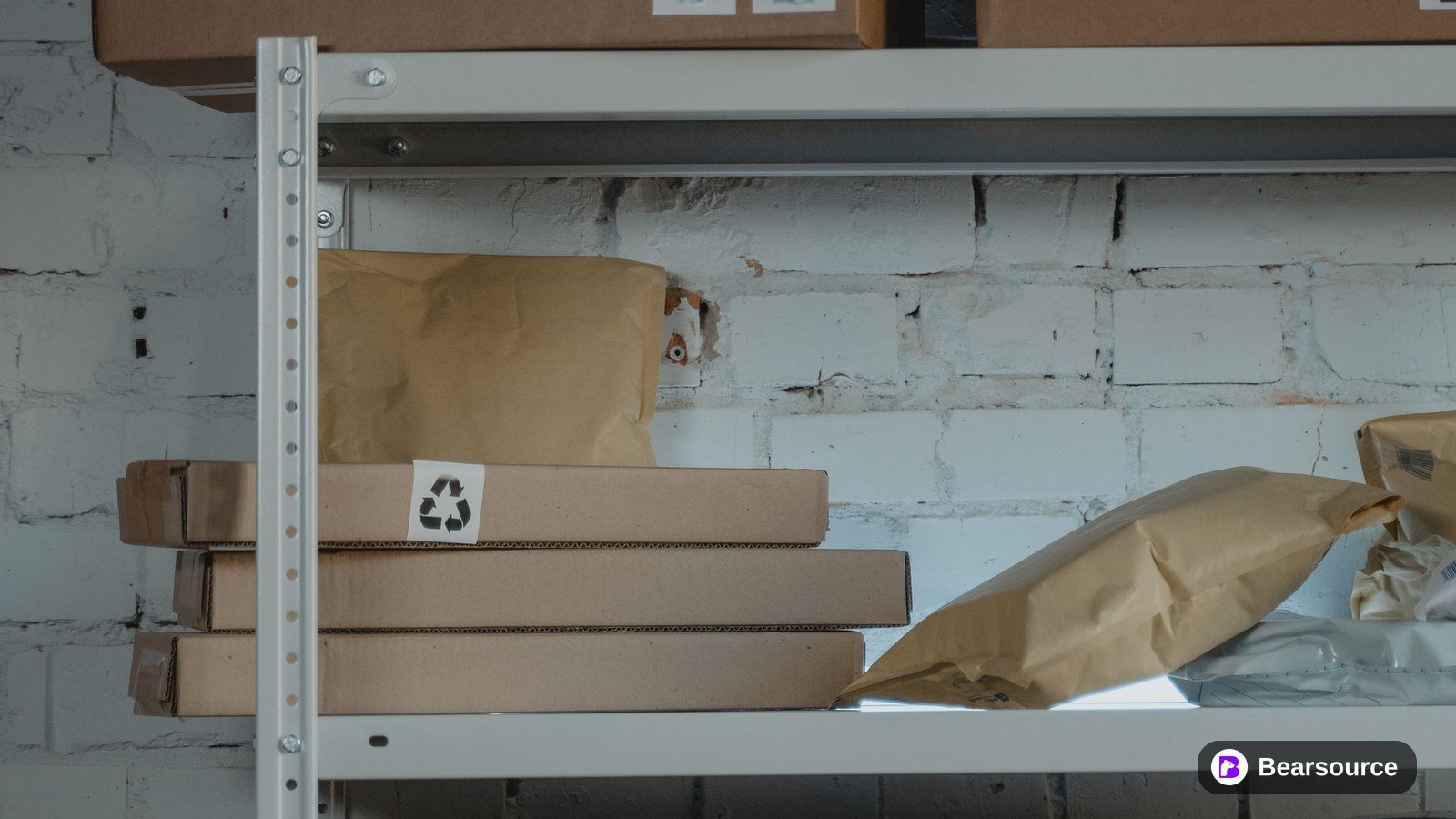
Your products are live on Amazon.de, the first pallets are on the water, and then the message lands: provide your LUCID registration number within days, or your listings will be deactivated. Nobody mentioned a packaging register — not the factory, not the freight forwarder. Welcome to the Verpackungsgesetz, Germany's Packaging Act. It catches foreign brands out every single week, and the fix is far easier before your goods land than after.
Germany runs packaging on extended producer responsibility (EPR): whoever first puts filled packaging on the German market pays for collecting and recycling it. The law behind it is the Verpackungsgesetz (Packaging Act), in force since 2019. It creates two separate duties that brands constantly confuse — and you need both:
One without the other is not compliance. And there is no small-seller threshold: the first parcel you send to a German customer already counts.
LUCID is the packaging register run by the Zentrale Stelle Verpackungsregister (ZSVR), Germany's central packaging agency. Registration is free, done online at verpackungsregister.org, and must be completed before your first sale into Germany. You receive a registration number — usually just called your LUCID number.
Two things brands get wrong. First, the register is public: competitors, marketplaces and authorities can all look up whether you're in it. Second, registration cannot be delegated. Even if you appoint a representative to handle everything else (more on that below), your company registers itself.
Registration alone doesn't pay for any recycling. For sales packaging — the retail box, polybag and product packaging that ends up with a private end customer — you also sign a licence contract with a dual system: companies such as Der Grüne Punkt, Interzero (whose Lizenzero service is popular with smaller sellers) or Landbell. You declare your packaging by material and weight — so many kilos of cardboard, plastic, glass, composites — and pay per kilo, per year. Then you report the same volumes in LUCID (the "data report"), so the register and the dual system match.
Small volumes are cheap: starter licences covering a few hundred kilos often cost under €100 a year. The money was never the problem. Not knowing is.
One timing rule surprises people: the licence is based on the volumes you plan to place on the market in the year ahead. You license your forecast, then reconcile against the actual volumes after year-end — in the dual system and in LUCID alike. If sales grow mid-year, you top the licence up. The ZSVR cross-checks the two data sets, and a mismatch between what you licensed and what you reported is one of the most common triggers for official questions. The register's whole design assumes the numbers agree.
The law doesn't chase the packaging factory in China. It obliges the "producer" (in German: Hersteller) — whoever first places filled packaging on the German market, commercially. In practice, that is:
Note that "your packaging" includes the shipping layer your fulfilment partner adds — the outer carton and void fill your customer's parcel arrives in. If you are the producer for that shipment, the outer layer is yours to license too, even if a warehouse in Germany physically packed it.
If your name is on the product and you bring it into Germany, you are the producer — even if every box was packed in Shenzhen. The duty only sits with a German distributor if they import the goods in their own name and on their own responsibility. "We assumed the distributor handles it" is not a legal position. Get the arrangement in writing, or register yourself.
Foreign producers without a branch in Germany work through an authorised representative (Bevollmächtigter) based in Germany, who handles the dual-system contracts and the reporting on their behalf. Under the EU's new Packaging and Packaging Waste Regulation (PPWR), which applies from 12 August 2026 — Germany's updated packaging law, the VerpackDG, runs alongside the Verpackungsgesetz — appointing one is mandatory for foreign companies selling directly to German end consumers. One limit stays: the representative cannot complete the LUCID registration for you. That step remains yours.
Since 1 July 2022, online marketplaces are legally required to verify their sellers. On Amazon.de you enter your LUCID number in Seller Central; Amazon validates it against the public register (allow around five working days) and deactivates listings that can't show a valid one. Fulfilment service providers carry the mirror-image duty: they may not store, pack or ship goods for producers who are not registered and licensed.
In other words, non-compliance doesn't arrive as a polite letter. It arrives as your listings going dark and your stock sitting frozen — mid-season.
The PPWR extends the same model across the EU: producer registration in every member state where you place packaging on the market, and marketplaces checking numbers before you can sell. France, Spain and Austria already run their own registers. If Germany is your first EU market, build the habit once — register, license, report — and the same discipline will carry you into the rest of Europe. It is the same lesson importers learned with the end of the de minimis era: the paperwork is now part of the product cost, and the brands that plan for it early are the ones still selling.
My German distributor says they're registered — am I covered?
Only if they are the producer for your goods: importing in their own name, on their own responsibility. If you import and they merely distribute, the duty is yours. Check whose name is on the import paperwork and on the product, and get the arrangement in writing.
Does LUCID cover electronics and batteries too?
No. Packaging is one register; electrical equipment (WEEE) and batteries have separate registers and duties in Germany. Selling a powered product into Germany usually means dealing with all three.
Is there a minimum — say, under 100 parcels a year?
No. Germany has no de-minimis threshold for packaging. Registration and licensing apply from the first package you place on the market.
Selling into Germany, or planning to? If you manufacture in Asia and sell in Germany, packaging compliance belongs in the production plan — weights, materials and registration sorted before the goods land, not after Amazon asks. That's how we run it: BearSource is a production-management partner, from first idea to shipped product, and our German office helps brands line up the German side while production runs in Asia. Tell us what you're selling, and where — we'll give you an honest read on what needs doing.
