29 September 2026 · Bearsource
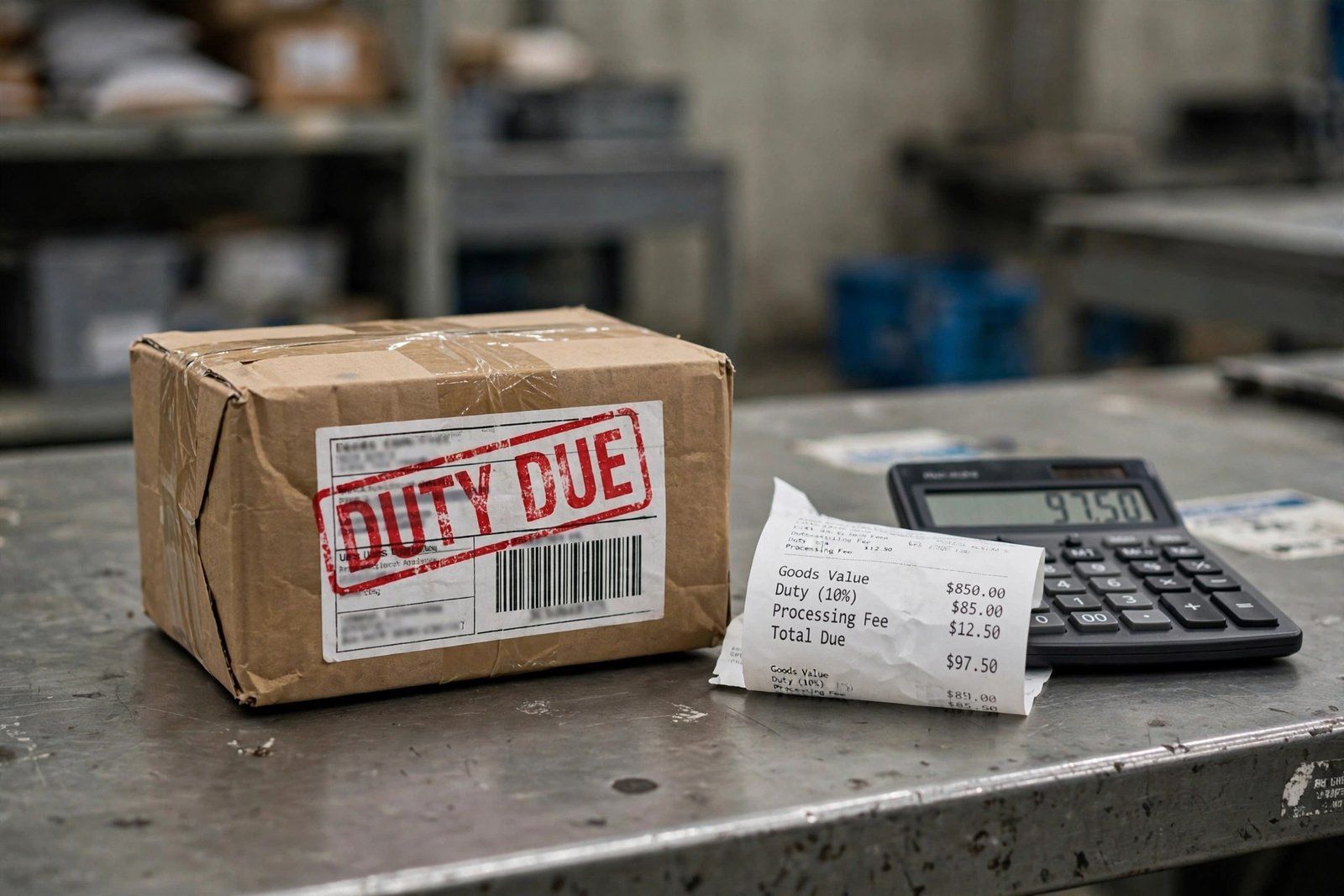
For years, there was a quiet gift hidden in the US customs code: any shipment worth $800 or less entered the country duty-free, with minimal paperwork and no broker. It was called the de minimis exemption, and thousands of small brands built their entire import math around it.
That gift is gone. If your landed-cost spreadsheet still assumes $800-or-less means $0 duty, it's wrong — and the error is eating your margin on every shipment.
Section 321 of the Tariff Act of 1930 let goods valued at $800 or less per person per day enter the US free of duty and with a fraction of the normal customs paperwork. It was designed as administrative kindness in the 1930s. It became the load-bearing wall of cross-border e-commerce — and countless small brands importing samples and small-batch inventory stood on it.
The EU ran a parallel change: its €150 duty relief ended July 1, 2026, replaced for now by a flat €3-per-item duty.
Take a small apparel brand importing a $300 factory-value shipment that used to slide through duty-free. Assume a 16% base duty plus 7.5% Section 301 tariff — a typical apparel stack:
| Declared goods value | $300.00 | $300.00 |
| Air freight / express | $45.00 | $45.00 |
| Import duties (base + Sec 301) | $0.00 | $70.50 |
| Merchandise Processing Fee | $0.00 | ~$2.20 |
| Broker / entry fee | $0.00 | ~$35.00 |
| Total landed cost | $345.00 | ~$452.70 |
That's a 31% jump in logistics cost per shipment — on goods that used to clear for free. If your net margin on that $300 sale was $80, you're now close to break-even before you've paid for anything else.
And it gets worse at the small end. A $200 parcel carrying 15% total duty picks up ~$30 in duty plus $80–$200 in broker fees for the formal entry. The paperwork can cost more than the duty.
The duty rate is only the first layer. Three more now apply to every shipment, no matter how small:
1. Merchandise Processing Fee (MPF). A percentage of value with a minimum per entry. Small shipments feel the minimum hardest.
2. Broker fees — per entry, not per container. This is the killer. One consolidated shipment = one entry fee. Fifty direct-to-customer parcels = fifty entry fees. The old model of shipping small parcels direct from the factory just got a $35–$200 charge added to every single box.
3. Stacked tariffs on China goods. Base rate + Section 301 (7.5–25% depending on the product list) + any additional measures. For postal parcels from China, the effective rate has run as high as 54%. There is no single rate — every HTS code is its own calculation.
Dead: dropshipping single units direct from China to US customers. Every parcel needs a customs entry, per-parcel broker fees destroy a $35 order's margin, and the supplier can't act as importer of record for your customer. As a cross-border model, it's over.
Surviving: bulk importing inventory and fulfilling domestically from a US warehouse. Consolidate ten small parcels into one shipment and you pay one entry fee instead of ten. The brands that adapted early are already doing this.
1. Rebuild your landed-cost sheet today. If it still has a $0 duty line for sub-$800 shipments, it's fiction. Use the worked example above as your template.
2. Consolidate shipments. Fewer, larger shipments mean fewer entry fees. This is now the single highest-leverage change most small brands can make.
3. Get your HTS codes reviewed. Duty lives and dies by classification. A wrong code means overpaying — or a penalty. This is broker work, not guesswork.
4. Price DDP terms into your quotes. Having the forwarder handle duties-paid delivery gives you a predictable per-unit number instead of surprise invoices.
5. Talk to a licensed customs broker before your next shipment — not after it gets held. The rules moved twice in 2026 already.
Nobody in the sourcing world loved telling clients their costs just went up 30%. But the brands that recalculated early are pricing correctly and still growing. The ones running 2024 math are wondering where their margin went.
We'd rather tell you early.
Facts verified 29 September 2026. Regulatory note: Bearsource is a sourcing and production management company, not a licensed customs broker or trade attorney. Tariff rates and CBP procedures change — confirm your HTS classifications and current rates with a licensed broker before acting. Key sources: CBP implementation of EO 14324 (90 FR 42418); CBP interim final rules, June 24, 2026 (91 FR 37789, 91 FR 37801); One Big Beautiful Bill Act §70531.
Importing into the US in 2026? We help founders, creators and ecommerce brands source, manage production, and land products with honest, up-to-date cost math.
Start a project