20 September 2026 · Bearsource
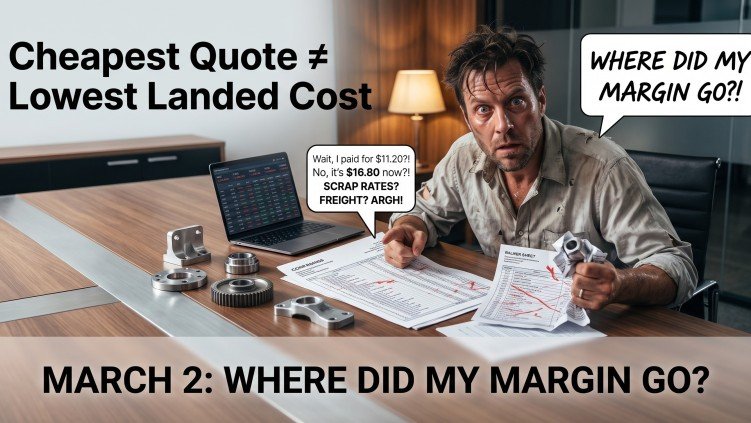
When you're reviewing factory bids for a new production run, it's tempting to fall in love with the lowest unit price on paper.
Factory A quotes $14.50 per unit. Factory B quotes $11.20 per unit.
On a 20,000-unit run, that's a $66,000 difference. The decision feels easy. You sign with Factory B, work out a projected 65% gross margin, and feel good about your unit economics.
Fast-forward six months:
When the dust settles, your real landed cost isn't $11.20 per unit. It's $16.80. Your 65% gross margin drops to 42%, and your cash flow takes the hit.
A quote only tells you what a factory wants to charge under perfect conditions. It tells you nothing about scrap rates, yield loss, material substitution or packing efficiency.
Real cost reduction doesn't come from beating a factory down on price until it cuts corners to survive. It happens on the ground:
The cheapest quote on paper is almost never the lowest cost at your warehouse door.
We build the product. Sourcing, sampling, quality control and production management for founders, creators and ecommerce brands.
Start a project