21 October 2026 · Bearsource
Everyone plans the product. Almost nobody plans the box.
Then it happens: the product is approved, production is moving, and someone asks, "Where are the boxes?" It turns out the packaging has its own supplier, its own minimum order and its own samples, and nobody started it yet.
Here's how to avoid that.
| Type | What it is | Good for |
|---|---|---|
| Polybag + mailer | Plastic bag inside a shipping mailer | Apparel, soft goods, low cost |
| Folding carton | Thin printed card that folds flat | Cosmetics, small electronics, retail shelves |
| Mailer box | Corrugated box that folds into shape | DTC brands, unboxing, gifts |
| Rigid box | Thick, strong board, doesn't fold | Premium products, gift sets |
| Shipping carton | Plain brown outer box | Protecting everything in transit |
Most products use two layers: the retail box your customer sees, and the outer carton that protects a group of boxes in shipping.
Your product might have an MOQ of 300. Your printed box might need 1,000. That's normal, and here's why:
Ways to lower it:
Don't forget the hidden one: box size affects shipping cost. A box that's slightly too big can add to every freight bill, forever.
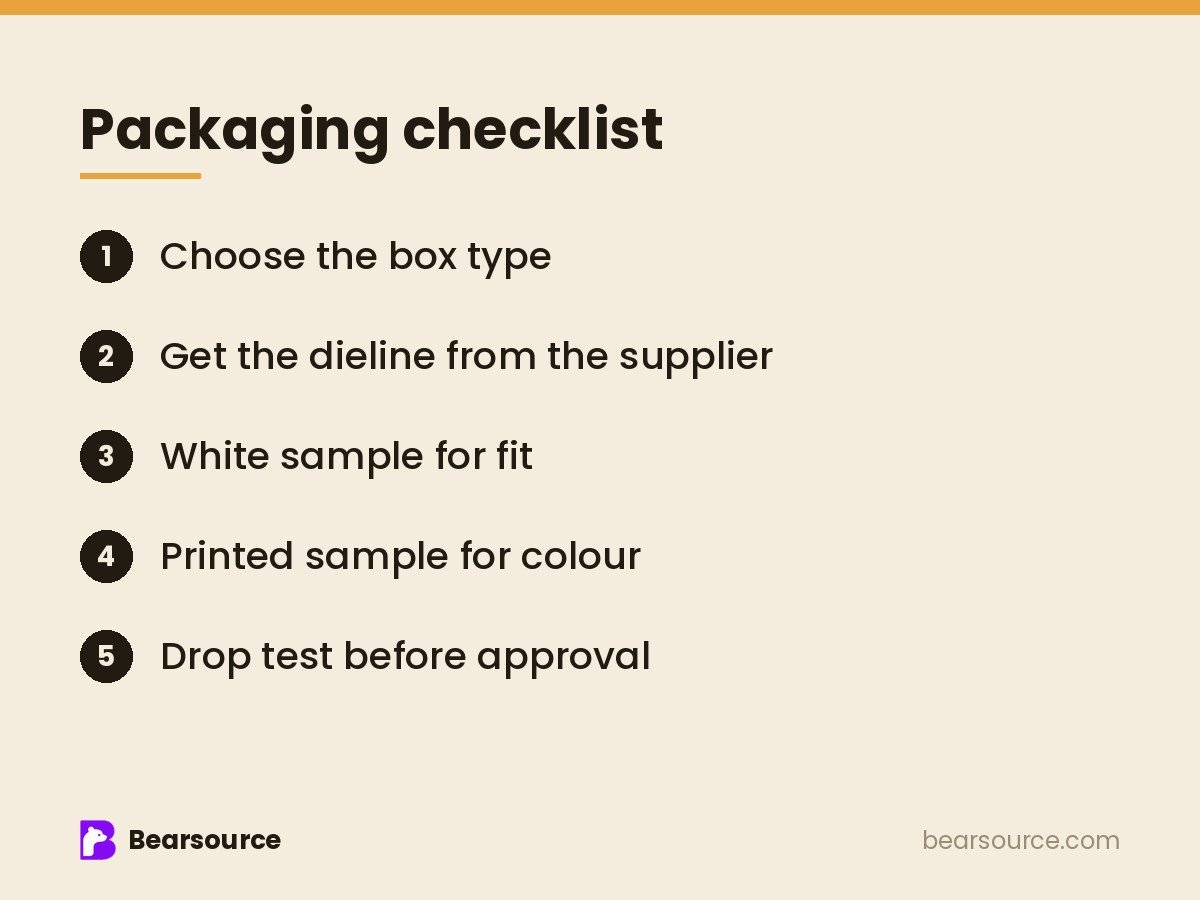
Packaging needs samples just like your product does:
Some marketplaces and retailers have their own packaging rules, so check yours before you approve.
Start packaging at the same time as your product samples, not after.
Done this way, packaging almost never delays a launch.
Packaging is a mini product of its own. It has a minimum, a supplier, samples and testing. Plan it early, keep the first run simple, and it'll be ready when your product is.
We manage your product from idea to delivery. Packaging included: sourcing the printer, sampling, drop tests and making sure the boxes arrive with the product. You bring the idea. We build the product.
