17 October 2026 · Bearsource
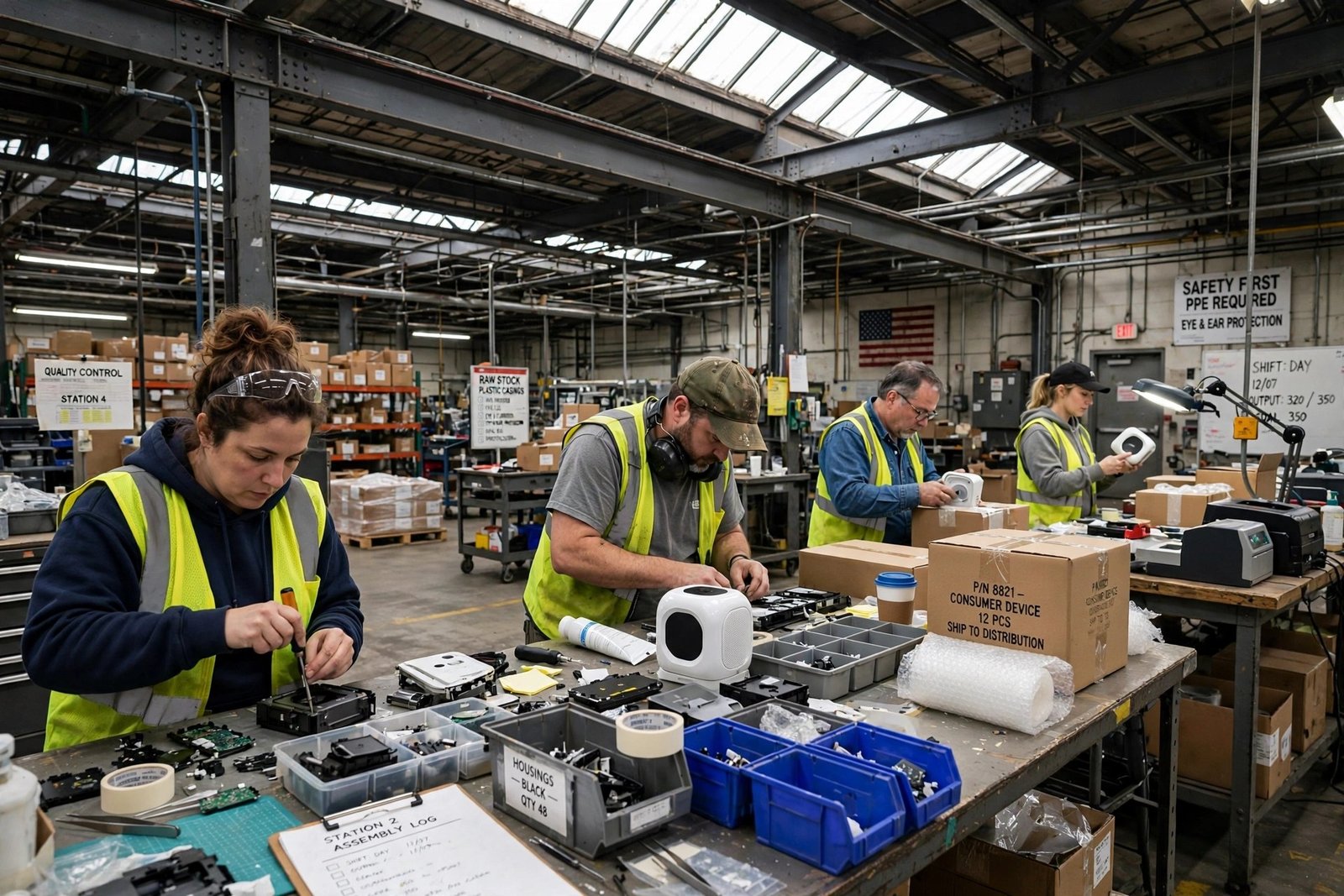
It usually comes up over coffee, about twenty minutes into the conversation. The founder slides the landed-cost spreadsheet across the table, taps the tariff line, and asks the question I hear every week now: "With tariffs this high — should we just make it in America?"
For years the math was comfortable. Then stacked tariffs rewrote the spreadsheet. A product that landed at eight dollars now lands at eleven or twelve — and nobody can say with confidence where the number sits next quarter. The question isn't really about patriotism. It's about control. Domestic manufacturing feels like the one lever you can actually pull.
It's a fair question. It just deserves an honest answer.
Start with labor: US factory wages run several multiples of typical Asian factory wages. For a product where assembly labor is thirty to forty percent of the cost, that alone can wipe out the tariff savings you're chasing.
But labor isn't the real shock. The real shock is the supply chain that isn't there. Screws, zippers, motors, circuit boards, silicone components, springs — the dense ecosystem of component suppliers that makes Asian manufacturing work largely doesn't exist domestically for most consumer categories. So you import the components — and pay tariffs on them anyway. "Assembled in USA" with eighty percent imported parts is the worst of both worlds: American labor rates plus the tariff bill.
It does work — for the right products. Heavy, bulky goods where ocean freight dominates: if freight is a bigger line item than the labor gap, domestic wins outright. Highly automated processes: when machines do ninety percent of the work, the wage gap barely registers. Products where Made-in-USA commands a real premium: some buyers — government contracts, patriotically positioned brands — genuinely pay more for it. If your customer pays the premium, the math closes. And speed: when a stockout costs more than the unit premium, fast domestic replenishment with no six-week ocean crossing is worth real money.
Labor-intensive assembly. Sewn bags with dozens of panels, hand-finished silicone kitchen tools — where human hands are the process, the wage multiple kills the math before you start.
Categories with no domestic component base. Importing nearly the entire bill of materials just to do final assembly at home: you keep the tariffs and add expensive labor on top.
Low-margin, high-volume goods where pennies decide. The math never closes, and hoping it will is not a strategy.
The smartest founders I know don't pick a side — they split the work. Source components where the ecosystem is deep and cheap, do final assembly, QC, kitting, and customization in the US. You keep the component cost base. Components ship denser than finished goods, so you cut freight. QC happens at home, where you can walk the floor. And you can customize late — different colors, bundles, retail-ready packaging — without placing a new overseas order. For many brands, this beats both pure offshore and pure domestic.
Forget the narrative and run the full stack: unit cost, freight, tariffs, warehousing, QC, rework risk, stockout cost, working capital sitting on the water. I've watched founders fall in love with "Made in USA" and founders fall in love with cheap Asia. Both are religions, and both lose to a spreadsheet. Decide on numbers.
Is reshoring actually happening at scale?
In pockets — heavy goods, automation-friendly products, and nearshoring to Mexico are real trends. But a broad return of labor-intensive consumer goods manufacturing hasn't happened, because the component ecosystem is the bottleneck. Factories need suppliers; suppliers need factories. Rebuilding that loop takes decades, not quarters.
What does "Made in USA" legally require?
The FTC standard is "all or virtually all" — the product and its significant components must be domestic. There are qualified claims like "Assembled in USA from imported parts," each with its own rules. Don't print it on the box until you know which claim you can actually make.
How do I find US manufacturers?
Thomasnet, Maker's Row, industry trade shows, and your state's Manufacturing Extension Partnership — every state has one, and they match you with shops. Then vet them exactly like an overseas factory: samples, references, a visit, financial stability. A domestic factory can disappoint you just as efficiently as a foreign one.
Running the reshoring math? We run the full landed-cost comparison — US, Mexico, Asia — line by line, so you decide on numbers, not narratives.
