24 October 2026 · Bearsource
You pitched the buyer. They liked the product. The price works. Then comes the email: "Please send the factory audit report before we can set you up."
This is where a lot of first big retail deals slow down, or fall apart. Not because the product is bad, but because the factory isn't ready for the retailer's audit.
Here's what retailers actually check, which audit programs they accept, and how to get ready before the buyer asks.
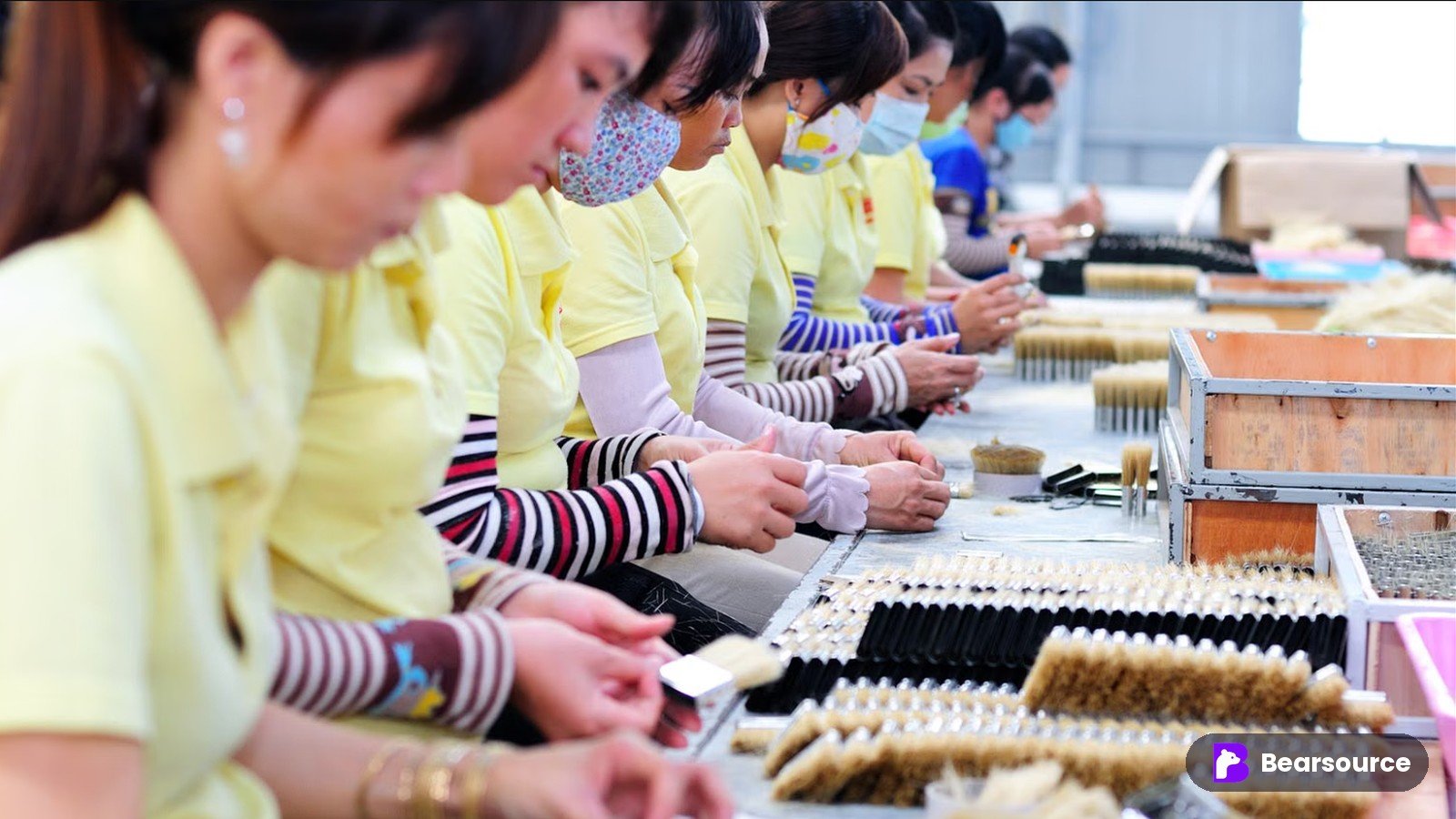
When a big retailer sells your product, their name is on the shelf next to yours. If a factory making that product uses child labour, locks fire exits or ships unsafe goods, it becomes their headline too.
So most large retailers have a supplier code of conduct, and they want proof that the factories making their products follow it. That proof is the audit report.
Important: the audit is about the factory, not just your company. Even if you're a two-person brand, the factory that makes your product is what gets checked.
This is the one almost every big retailer asks for. It checks how workers are treated:
This checks whether the factory can make your product consistently:
Some retailers use their own quality audit. Others accept a recognised capability assessment.
For goods shipped to the US, some retailers also want proof the supply chain is secure, often linked to the US customs CTPAT program. It checks things like container sealing, who can enter the loading area, and how shipments are tracked. The goal: nothing gets added to your container that shouldn't be there.
Many retailers don't send their own auditor every time. They accept reports from recognised programs. For example, Walmart's Responsible Sourcing team lists these approved third-party programs:
| Program | Works for |
|---|---|
| amfori BSCI | All product types (membership required) |
| SMETA (Sedex) | All product types. Walmart requires the 4-pillar version |
| SA8000 | All product types, 3-year certification |
| WRAP | Apparel, textiles, soft goods |
| RBA | Electronics and toys |
| Ethical Supply Chain Program (formerly ICTI / IETP) | Toys, juvenile, gifting, seasonal, packaging |
Costco works with independent auditors who must, with very few exceptions, be members of the professional auditor body APSCA. For higher-risk factories, Costco says audits are partially announced (a two-week window) and happen at least once a year at first. Any problems must be fixed with a corrective action plan that has a deadline for each item. Costco may also accept some existing independent audit reports in place of its own.
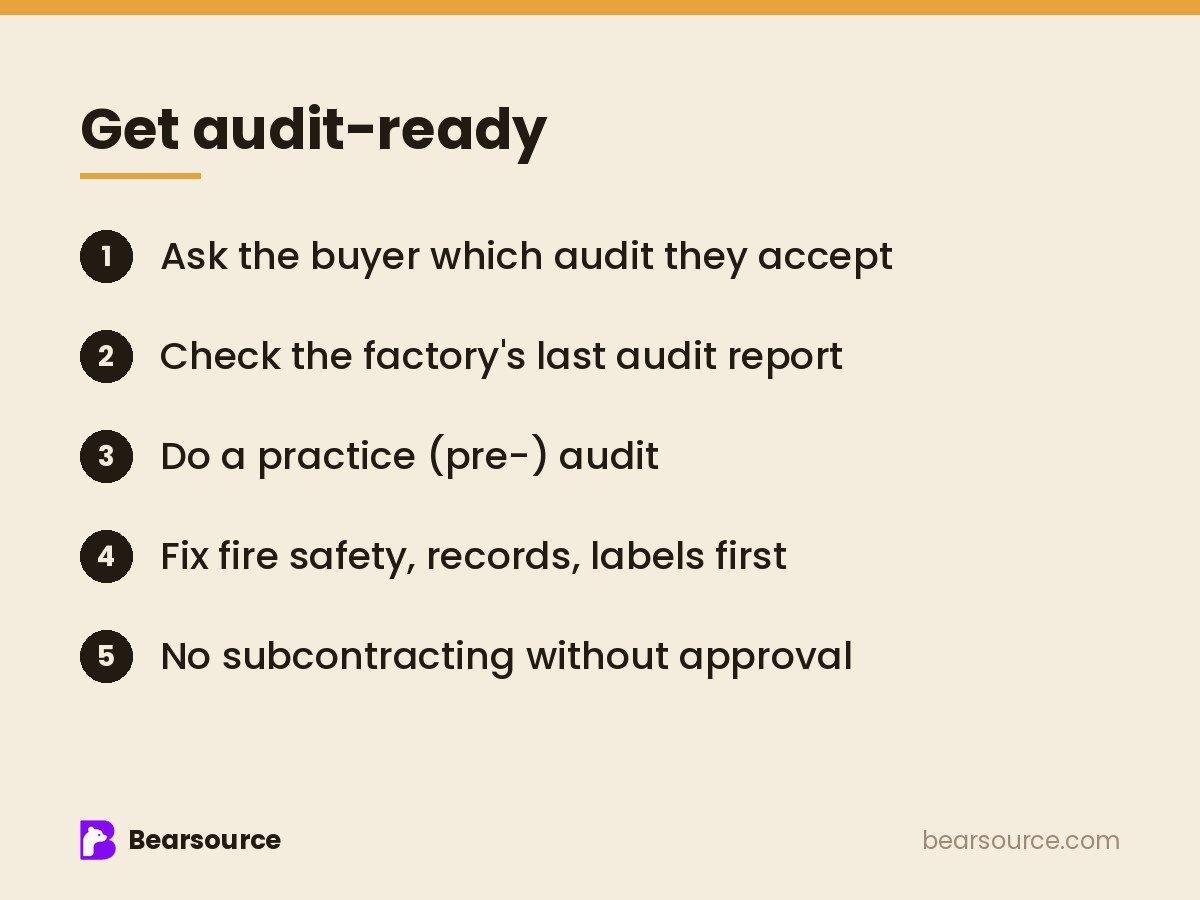
Every retailer has its own list and its own rules, and they change. Always ask the buyer which audit they accept before you book one. Paying for the wrong audit is a common and expensive mistake.
That last one is a big one. If your order is quietly moved to another workshop, that workshop isn't covered by the audit report. Retailers treat this as serious.
A retailer audit isn't a box to tick at the end. It decides whether your factory, and so your product, can go on the shelf at all. Ask the buyer which audit they accept, choose a factory that already passes, do a practice audit first, and keep it up every year.
We manage your product from idea to delivery. For retail programs, that means choosing factories that can pass retailer audits, arranging pre-audits and corrective actions, and keeping production ready for the buyer's checks. You bring the idea. We build the product.
