3 October 2026 · Bearsource

Ask ten sourcing agents what they charge and you'll get ten different answers — which is exactly why this question matters. The fee structure tells you what business you're actually dealing with: a transparent partner, or a markup machine wearing an agent's name. Here's the honest breakdown of what sourcing agents charge in 2026, what each model includes, and where the real costs hide.
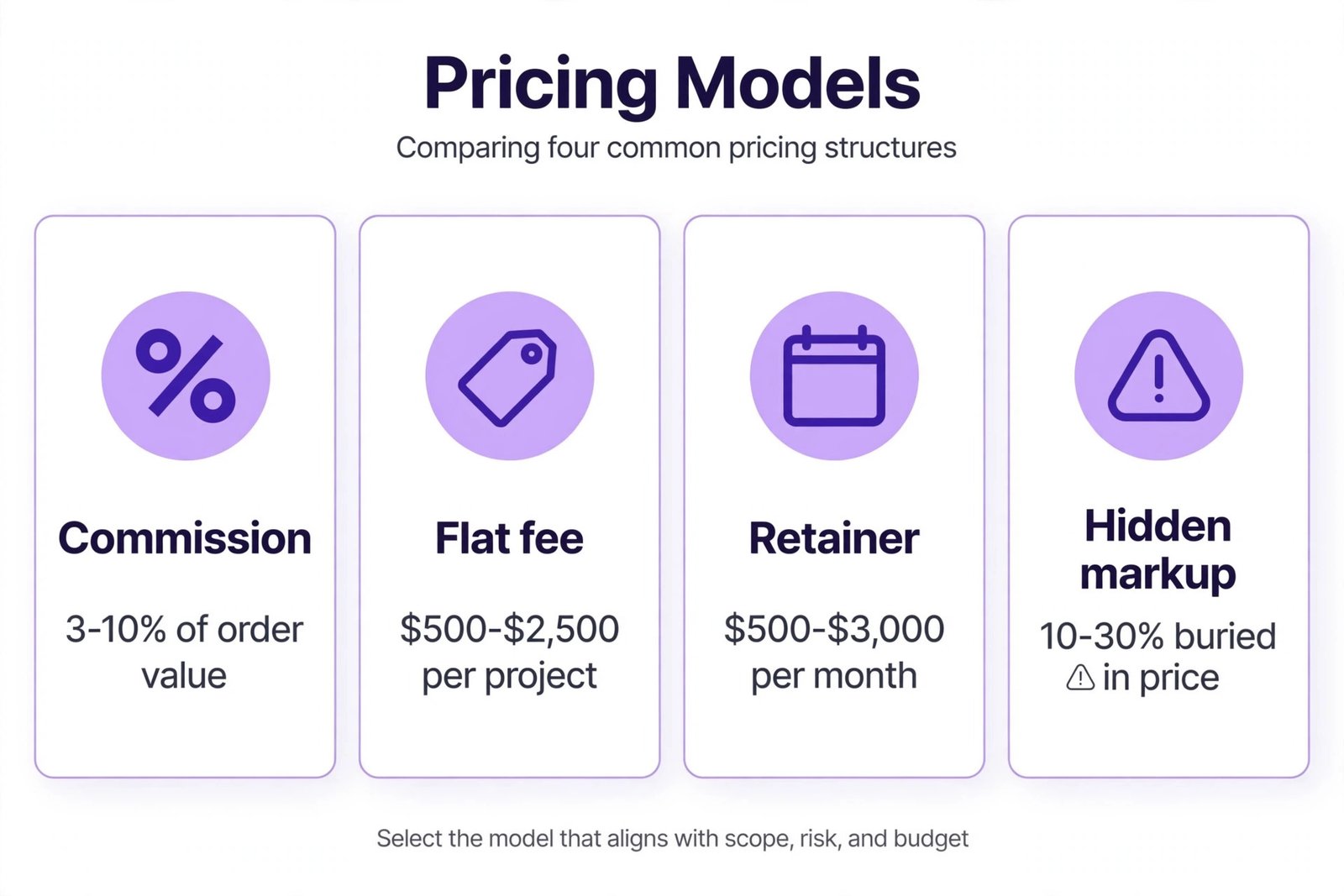
Most sourcing agents working with overseas buyers charge between 3% and 10% of total order value as commission. Where you land in that range depends on four things:
If someone quotes you 1–2% for full-service sourcing, QC, and logistics management, be skeptical. That margin has to come from somewhere — and "somewhere" is usually a kickback from the factory, which means the factory is charging you more to fund it.
The agent takes an agreed percentage of each order — typically 3–10%. This is the standard model for ongoing production relationships because incentives align: the agent earns more when your orders grow.
Best for: repeat production with the same or expanding supplier base.
Watch out for: agents who won't show you the factory's original quotation. If the commission is "3%" but the factory price is inflated 15%, you're paying 18%.
A fixed price for a defined scope — commonly $500–$2,500 per sourcing project for supplier identification and initial vetting, or $200–$500 per order for simpler buy-and-ship jobs.
Best for: one-off RFQs, trial orders, or buyers who want to test a relationship before committing.
Watch out for: scope creep. Every engineering revision and re-sample costs the agent time; make sure the contract defines how many iterations are included.
$500–$3,000/month for small-to-mid operations, up to $8,000/month for enterprise "buying office" setups. Usually paired with per-service fees for inspections and logistics.
Best for: brands with continuous product development pipelines and multi-factory coordination.
Watch out for: high minimums. A retainer is uneconomical if you're placing two orders a year.
No visible fee at all — the "agent" buys from the factory and resells to you. The markup is buried in the unit price, typically 10–30%, sometimes 40%.
Best for: almost nobody who knows it's happening.
Watch out for: this is the model to run from. You can't negotiate what you can't see, and the incentive is for the middleman to pick the factory that pays them best, not the one that makes your product best. A legitimate sourcing agent charges a transparent fee on top of a visible factory price. If an agent won't show you the factory quote, they're a trading company.
Here's the pattern we've seen burn buyers more than any other: an agent quotes 3% commission. The buyer thinks they've found a deal. But the agent is taking a 10–15% kickback from the factory — so the factory inflates the unit price to cover it. The buyer's "cheap" agent actually costs them 18% on a worse factory choice.
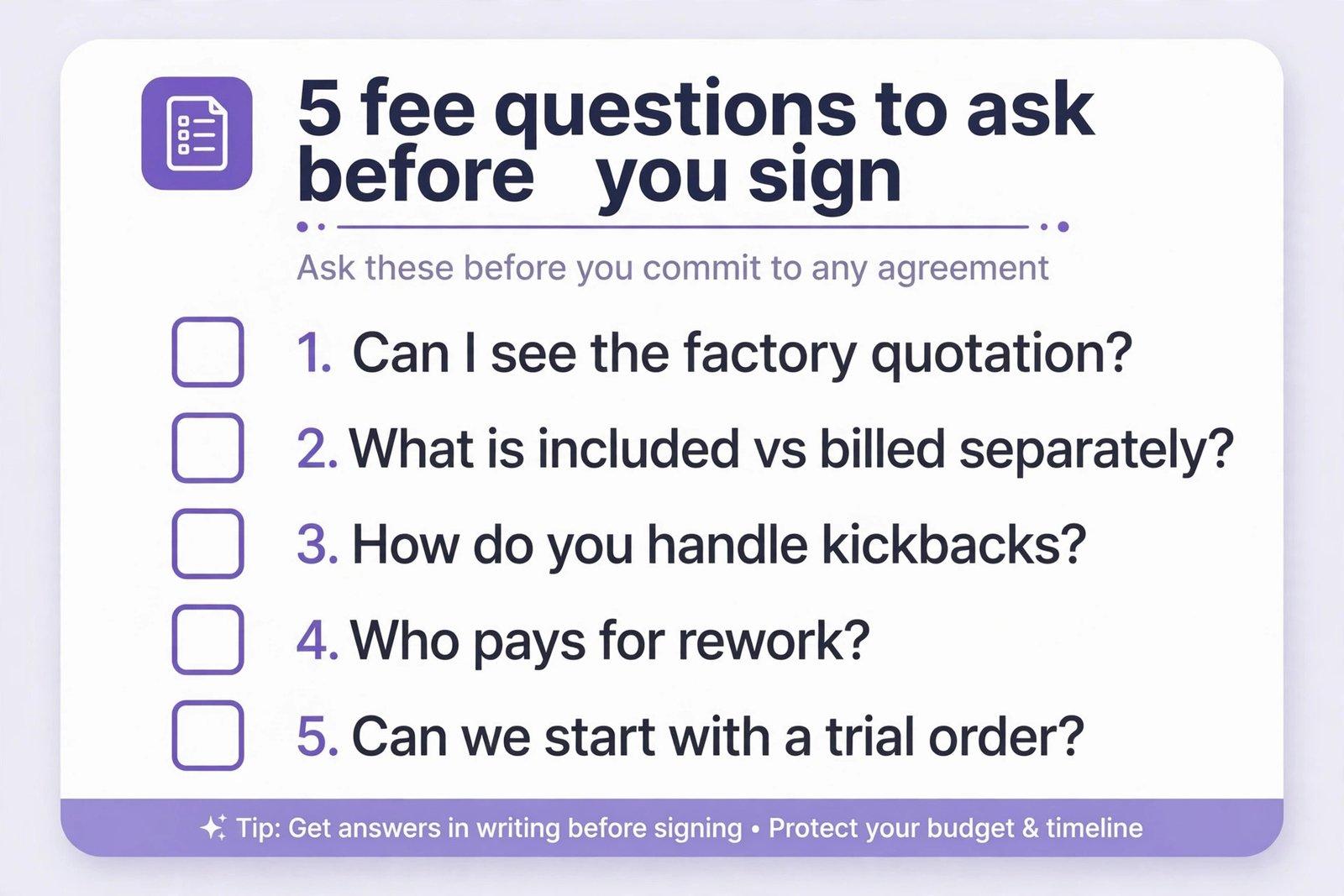
Industry practitioners estimate hidden kickbacks can inflate true cost by 20–25% versus a transparent arrangement. The defense is simple:
This is the same math as factory quotes themselves — the cheapest number on paper is almost never the lowest cost at your warehouse door. (We worked through that exact trap in Where did my margin go?)
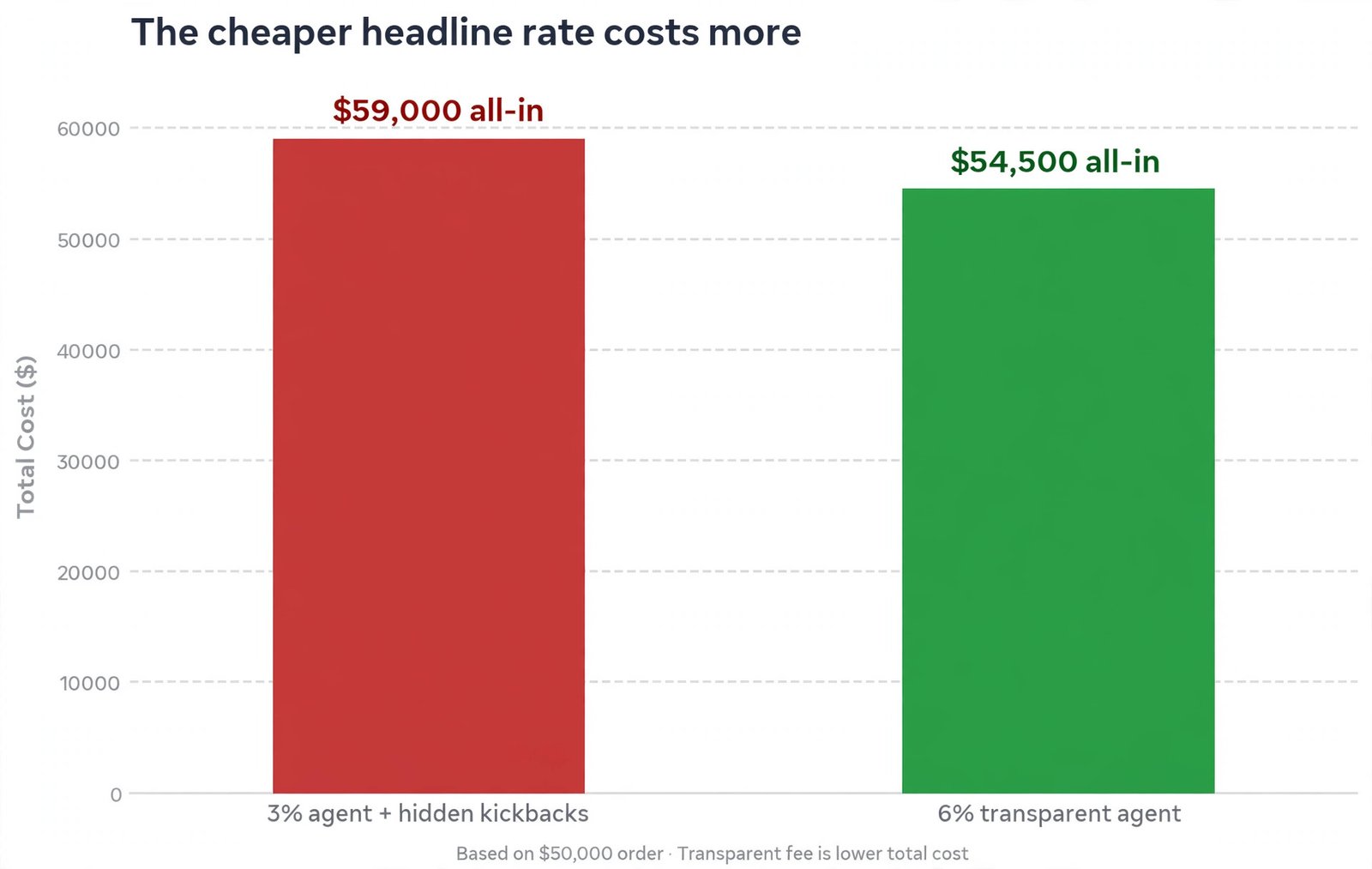
Say you're placing a $50,000 first order for a consumer electronics accessory:
The numbers are illustrative, not quotes — but the shape is real. Transparency is the cheapest model there is.
Is a 3% sourcing agent too cheap to be legitimate?
Not automatically — on large orders ($100k+), 3% of a big number is real money and the model works. Below $20k orders, a 3% headline rate should make you ask hard questions about where the margin comes from. Transparency matters more than the percentage.
Do sourcing agents charge for samples?
Usually the factory charges for samples (or charges and rebates on order), and the agent passes that through at cost, sometimes plus a handling fee. Ask upfront — sample cost surprises are a classic friction point. At BearSource, samples and shipping are on you at cost; what you're paying us for is the service — finding the right factory, managing the sampling process, and making sure what arrives matches what you approved.
When does a monthly retainer make sense?
When you have continuous development work — new products every quarter, design reviews, multi-factory programs. If you're placing one or two straightforward reorders a year, commission or flat-fee is cheaper.
Should I just use a freelancer on Upwork instead?
For simple tasks under ~$10k with clear specs, a vetted freelancer can work. For custom tooling, compliance certifications, or anything where a disappearing freelancer would strand your production calendar, use a structured agency with a team. The fee difference buys institutional backup.
How does BearSource charge?
We keep it public and simple: a $250 discovery session (credited toward your project if you move forward within 30 days), one-time projects from $1,000–$12,000+ depending on scope, and ongoing partnerships for brands in active production. See full pricing.
Importing your first product, or rethinking your current setup? Tell us what you're making — we'll give you an honest read on whether we can help, and what it would cost.
