15 October 2026 · Bearsource
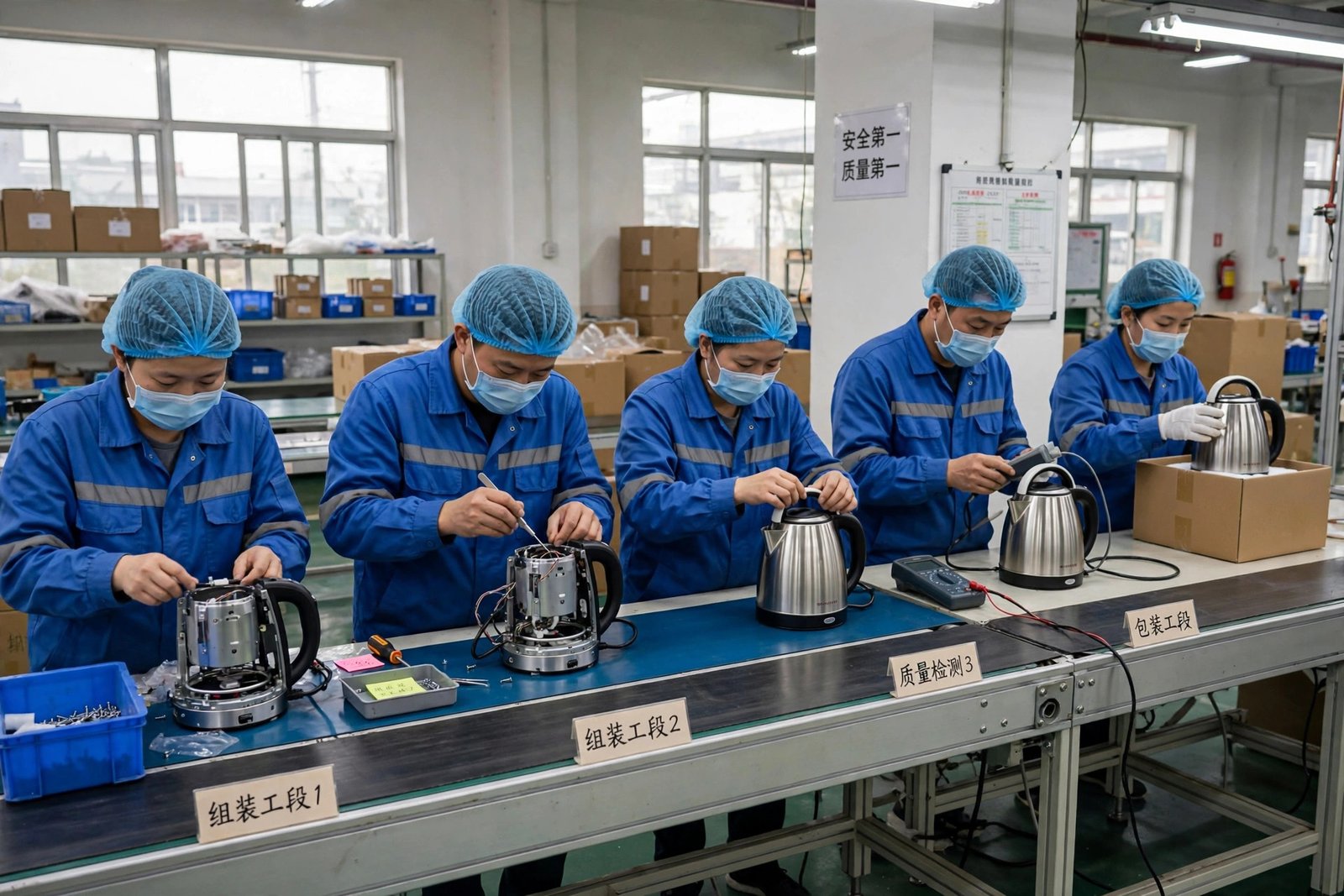
The motor came from Dongguan. The housing from Shenzhen. The packaging from a third supplier an hour away. Each piece was perfect on its own. The assembled product was a disaster — and nobody would claim it.
It feels like smart sourcing. You price-shop each component, pick the cheapest winner per line item, and the spreadsheet looks beautiful. It also feels like risk management — if one supplier fails, the others keep going. Three quotes, three winners, best price on every line.
The spreadsheet is lying. It prices the components. It doesn't price the integration — because integration is where the product actually gets made.
Tolerance stack-up. Every part is within spec. The motor is at the top of its tolerance, the housing at the bottom of its. Each one passes QC. Assembled together, they don't fit — or they fit badly, rattle, overheat. No single supplier did anything wrong. The product is still broken.
The blame triangle. The motor supplier blames the housing. The housing supplier blames the assembler. The assembler blames both. You are now the full-time mediator of a dispute between three companies in three cities, in a language you don't speak, over a product that's already late.
No one owns the finished product. This is the real killer. Each supplier owns their component — tested, passed, shipped. Nobody owns what happens when the pieces meet. And the meeting of the pieces is the product your customer buys.
Ten thousand units. Eight percent defect rate. Each supplier shows you their QC reports — all passed. Sorting and rework falls on you: a US warehouse, opened cartons, tested units, rebuilt products. The "savings" from splitting suppliers evaporate in a single rework bill — and the launch delay costs more than the components ever did.
Ask any founder who's lived it: the cheapest supply chain is the one where someone is responsible.
It works when you are the integrator — when you have someone competent on the ground, managing the handoffs, owning the assembly spec, and holding every supplier to the finished product, not just their component. That's not three suppliers. That's you running a factory without owning one.
It also works when one supplier does final assembly and owns the result. They can subcontract components all they want — that's their supply chain, their problem, their QC. You hold one throat: the factory that ships you finished goods.
One factory owns your finished product. Full stop. They can buy motors from Dongguan and housings from Shenzhen — fine. But the purchase order, the QC standard, and the accountability all point at one door. When something fails, there's exactly one phone call to make.
Founders split suppliers to save money. The ones who survive consolidate responsibility to save the product.
Isn't single-sourcing risky?
It's a managed risk versus an unmanaged one. If you're worried about dependency, dual-source finished goods — two factories, each owning a complete product. Never dual-source components and assemble the chaos yourself.
What if one factory can't make every part?
Most can't. They subcontract — and that's fine, as long as they own final QC and the finished product ships from their door. Their subcontractors are their problem, not yours.
Does this cost more per unit?
Sometimes. A single factory doing everything rarely wins every line item on price. But count the total: no blame triangle, no rework warehouses, no launch delays. The "expensive" option is almost always cheaper.
Building a product across multiple suppliers? We'll structure your supply chain so one factory owns your finished product — and the quality that comes with it.
