30 September 2026 · Bearsource
Every product business that manufactures in China went through the same first step: staring at 4,000 Alibaba listings wondering which one is a real factory. This guide is the process we actually use — where to look, how to separate factories from middlemen, how to vet before you wire money, and the red flags that should stop you cold.
No factory can quote what you can't describe. Before you contact anyone, write down:
You don't need engineering drawings on day one — a clear one-page spec sheet with photos gets you real quotes. Vague inquiries get vague (or predatory) pricing. The factories worth working with respond better to buyers who know what they want.
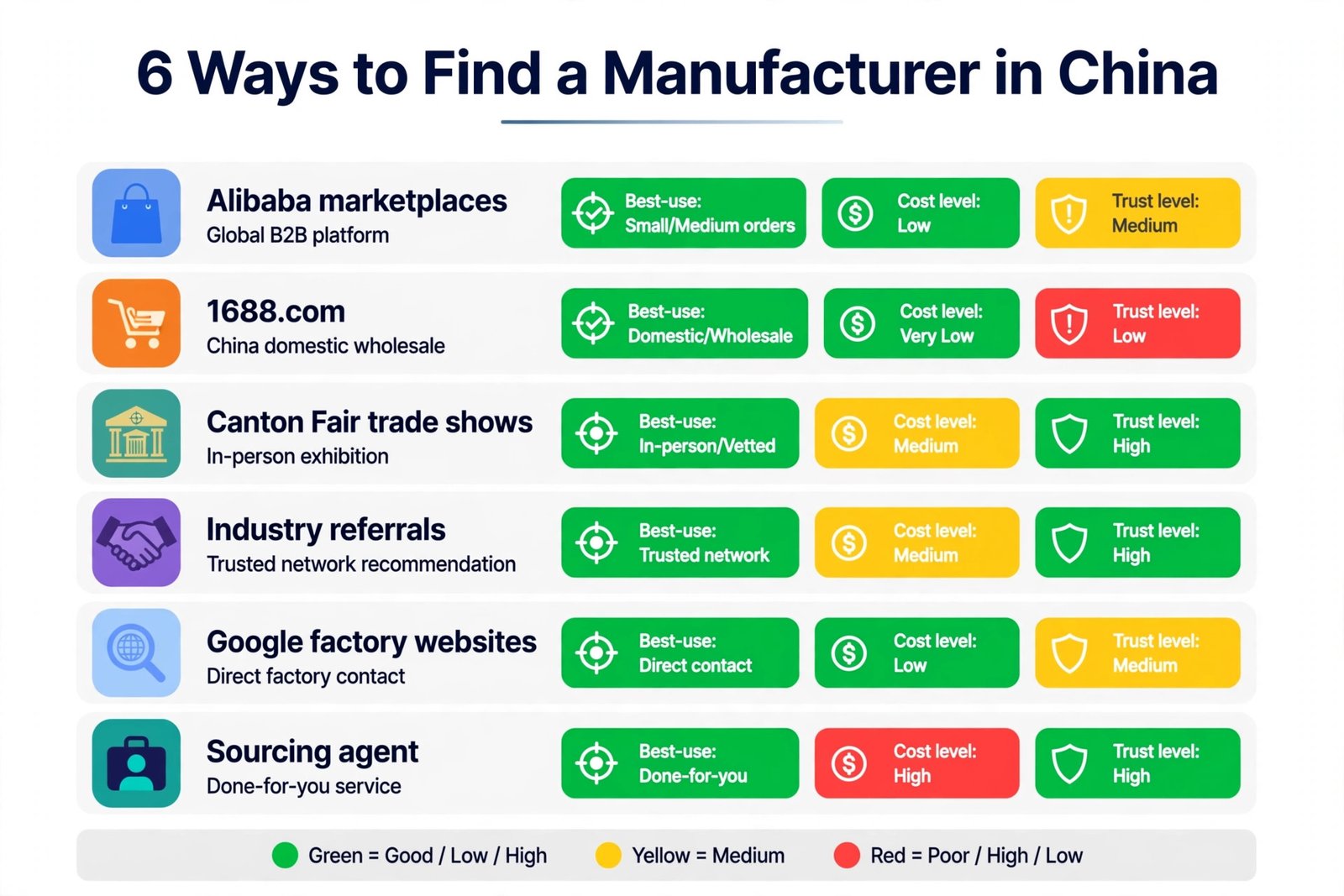
The starting point for most buyers. Huge selection, buyer protection programs, messaging built in. But: most listings you'll find are trading companies, "verified" badges can be purchased as paid memberships, and the platform can't tell you which supplier is right for your product. Use it for discovery, not for trust.
Alibaba's domestic-Chinese sibling. Prices are often 30–50% lower because you're seeing the market factories sell to each other in. The catch: it's in Chinese, most sellers don't export directly, and you effectively need an agent or a Chinese-speaking partner to use it. This is where experienced buyers graduate to.
Twice a year in Guangzhou, plus the Global Sources fair in Hong Kong and the Yiwu fair for small commodities. Nothing replaces standing in front of a supplier's booth, handling their samples, and watching how they answer hard questions. If your product matters, budget for one trip.
The best factories don't advertise — they're full from repeat business. Ask other founders, your freight forwarder, your compliance lab. A warm introduction beats a hundred cold messages.
Real manufacturers increasingly have English websites. Search [your product] + manufacturer + [city/province] (e.g., "silicone kitchenware manufacturer Guangdong"). Lower volume than Alibaba, higher signal.
Someone on the ground who already knows which factories do good work in your category. This is what we do at BearSource — and the honest version of the pitch is: an agent is worth it when the cost of getting it wrong (a bad production run) exceeds the agent's fee. For a $50k+ first order, it almost always does.
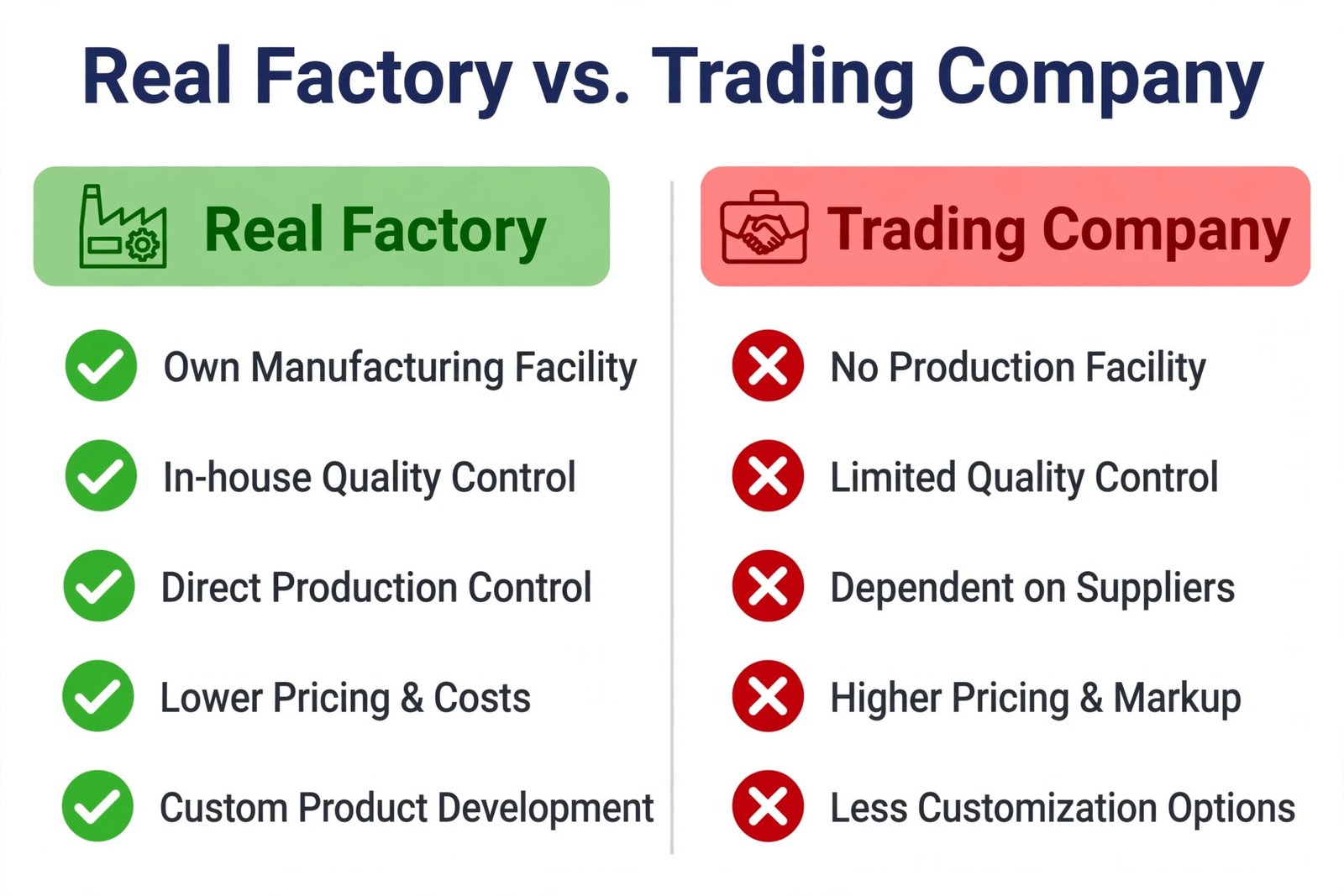
This is the single highest-value skill in sourcing. Trading companies aren't automatically bad — good ones provide real value — but you should never accidentally hire one while thinking you've found a factory. You're paying factory-direct prices for middleman service.
Signs it's a real factory:
Signs it's a trading company:
When in doubt, ask directly: "Are you the manufacturer, or a trading company?" Then verify the answer anyway.
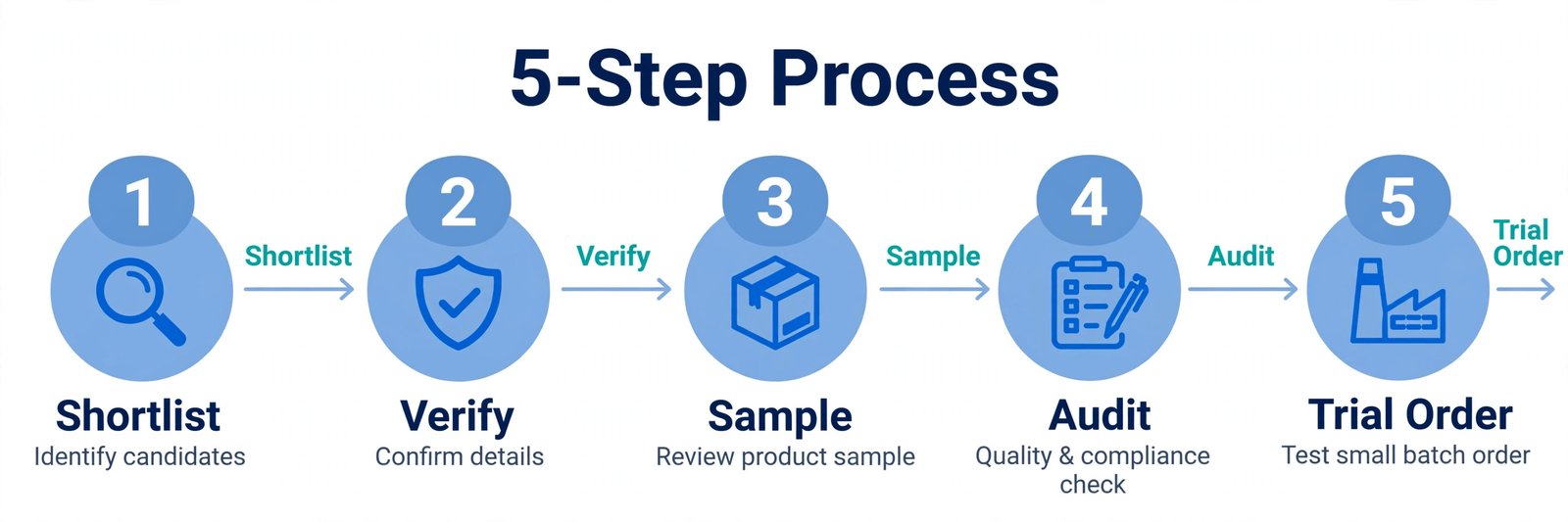
Don't try to pick a winner from quotes alone. Run this sequence:
Finding the factory is the midpoint, not the finish line. The relationship is built in the first order: clear POs with specs attached, agreed Incoterms, inspection rights written into the contract, and a payment schedule tied to milestones — not promises.
Then stay close. The buyers with the fewest quality problems aren't the ones who found the perfect factory; they're the ones who stayed engaged through production. That's the "desktop trap" — you can't manage a factory floor from an inbox 6,000 miles away (we wrote about it here).
That's the network BearSource brings to the table. Our team works directly with a vetted factory network across Asia — with people on the ground in China — and we've run this exact process for 80+ clients, from first-time founders to teams that have shipped for Amazon, Walmart, and Costco. Our core production verticals are premium fashion, consumer electronics, and lifestyle accessories, but we're always up for something new.
Do I need to visit China to find a good manufacturer?
No — but someone needs to be on the ground at key moments: the audit, the first production run, and any time there's a quality dispute. That someone can be you, your agent, or a third-party inspector. What doesn't work is nobody.
Can I trust "Verified Supplier" badges on Alibaba?
As a first filter, cautiously. The badges confirm the business exists and paid for verification — not that it manufactures well, or manufactures at all. Treat them as the start of vetting, not the end.
How many quotes should I get?
Five to eight for a real comparison. Fewer and you're guessing; more and you're drowning. Discard the highest and lowest before analyzing — the middle cluster is where the true market price lives.
Should I work directly with the factory or use an agent?
If you have China experience, speak the language (literally and commercially), and can be on the ground for production, direct works. If this is your first or second product, the agent's fee is insurance against the five-figure mistakes first-timers make.
How long does the whole process take?
Realistically: 2–4 weeks to shortlist and verify, 2–6 weeks for sampling rounds, 1–2 weeks for audit and negotiation. Budget 2–3 months from first search to production-ready — before manufacturing lead time even starts. New to this world? Start with our beginner's guide to how manufacturing actually works.
Facts verified 30 September 2026. Bearsource is a sourcing and production management company, not a legal or trade-compliance advisor. Factory verification practices and platform policies change — confirm current requirements before acting.
Looking for a manufacturer but don't want to run this gauntlet alone? Tell us what you're making — if it's in our network's wheelhouse we'll say so, and if it isn't, we'll tell you that too.
Start a project