22 October 2026 · Bearsource
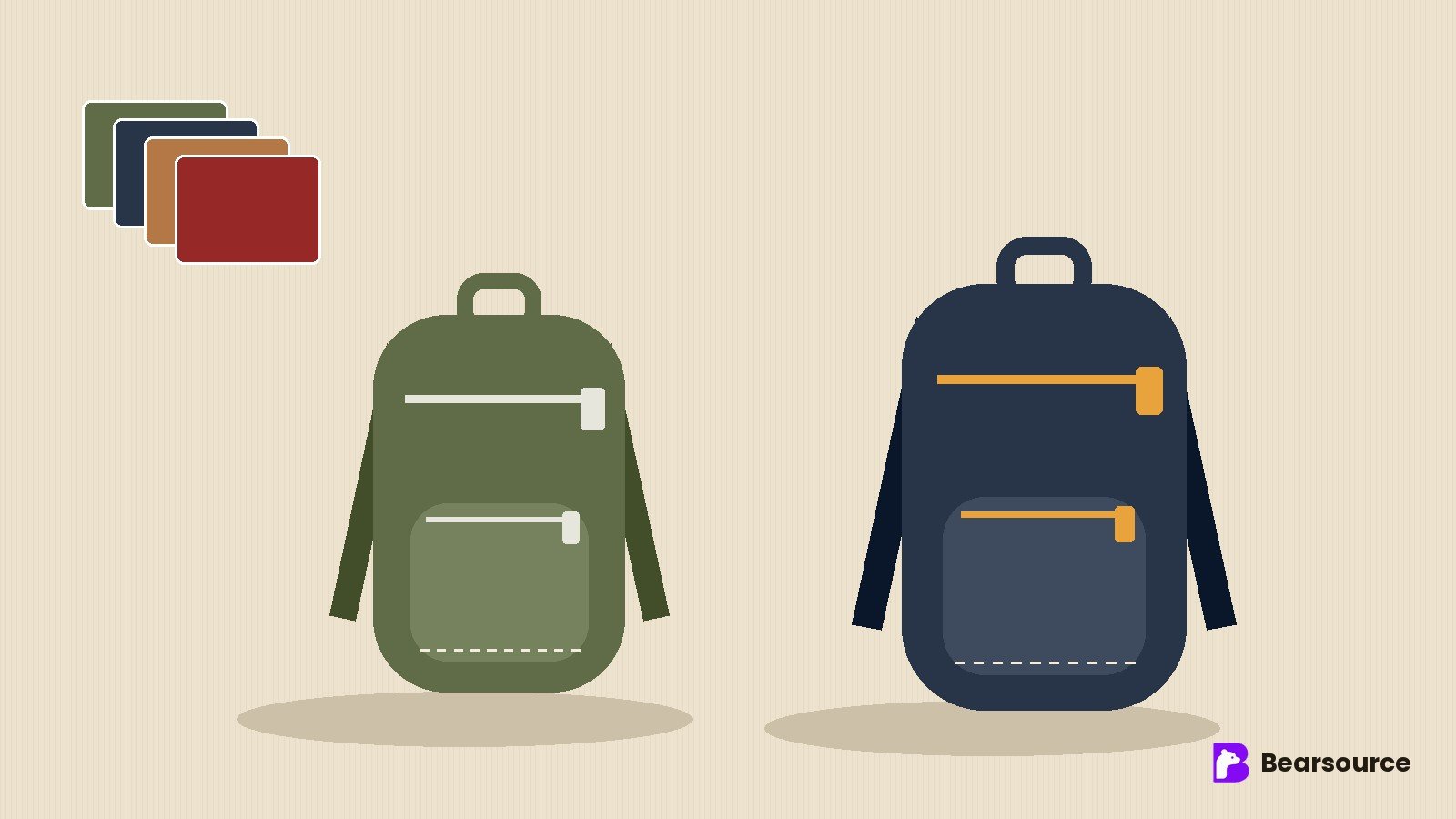
A backpack looks simple. Then you count the parts: main fabric, lining, zippers, pullers, buckles, webbing, foam, mesh, labels, and sometimes a laptop sleeve. A typical bag can have dozens of pieces, and every one of them can go wrong.
Here's how a custom backpack actually gets made, and what to watch.
The fabric decides how the bag looks, feels, lasts, and what it costs.
| Fabric | What it's like | Common use |
|---|---|---|
| Polyester (e.g. 600D) | Affordable, light, good colours | Everyday and promo bags |
| Nylon | Stronger and smoother, costs more | Travel and outdoor bags |
| Heavy-duty nylon (e.g. 1680D) | Very tough, slightly shiny | Premium travel, laptop bags |
| Recycled polyester (rPET) | Made from recycled bottles | Eco-focused brands |
| Canvas | Natural look, heavier | Lifestyle and fashion bags |
The "D" number (denier) is about the thickness of the yarn. Higher usually means tougher, but weave and coating matter just as much. Always feel a swatch before deciding.
This is where cheap bags fail first.
For custom backpacks, factories often ask for a few hundred units per colour, sometimes more. What pushes the minimum up:
To start smaller: use stock fabric colours, standard hardware, and add your brand with a woven label, patch or embroidery.
Expect 2–3 sample rounds:
Tip: use the bag for a week. Fill it, carry it, overstuff it. You'll find things no photo will show you.
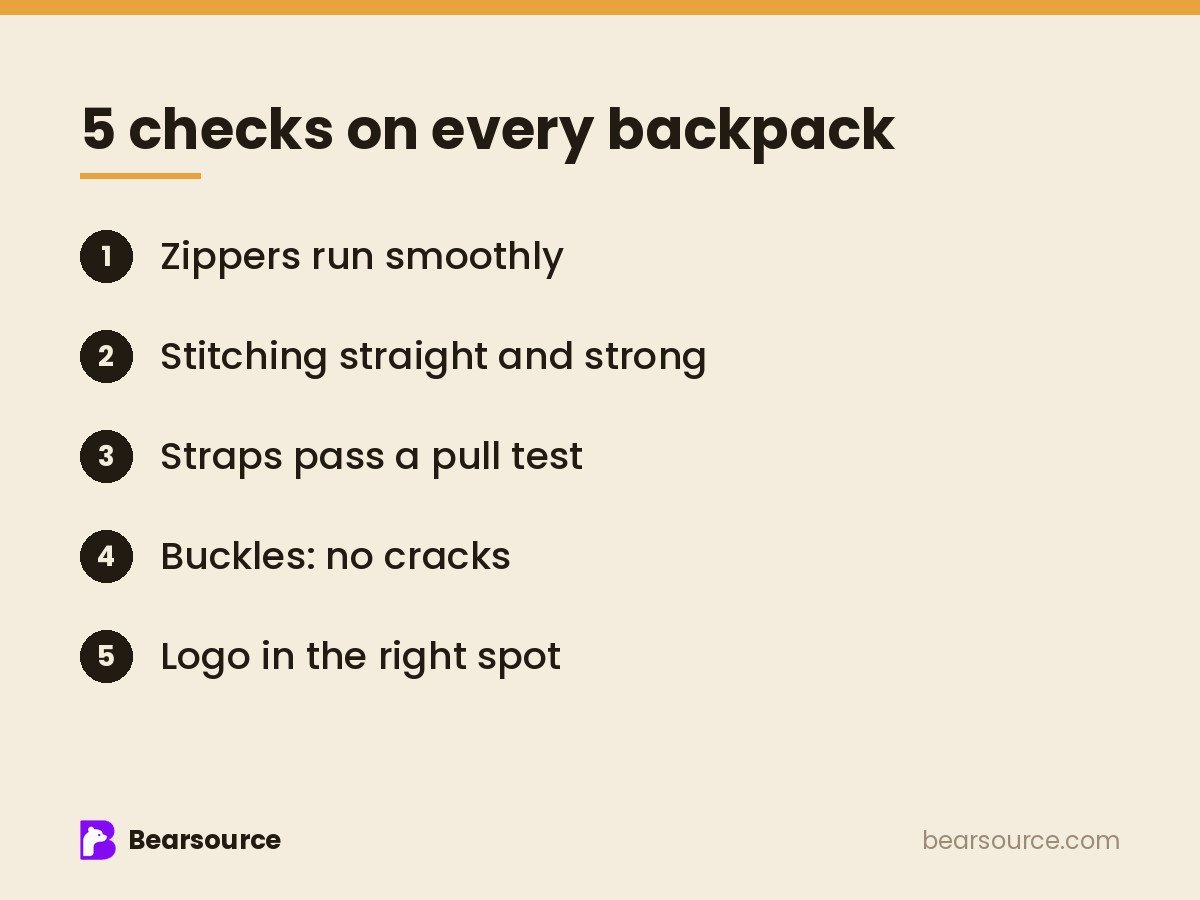
These are checked during production and again before shipping, usually with a standard sampling method so the check is fair and repeatable.
Roughly: sampling a few weeks, production often 30–60 days depending on quantity and season, plus shipping. Plan extra time around Chinese New Year.
A great backpack comes down to good fabric, good hardware and boring, careful checking. Start with stock materials, give honest feedback on samples, and check every bag, not just the first one.
We manage your product from idea to delivery. For bags, that means sourcing the right fabric and hardware, managing samples and checking every unit before it ships. You bring the idea. We build the product.
