14 October 2026 · Bearsource
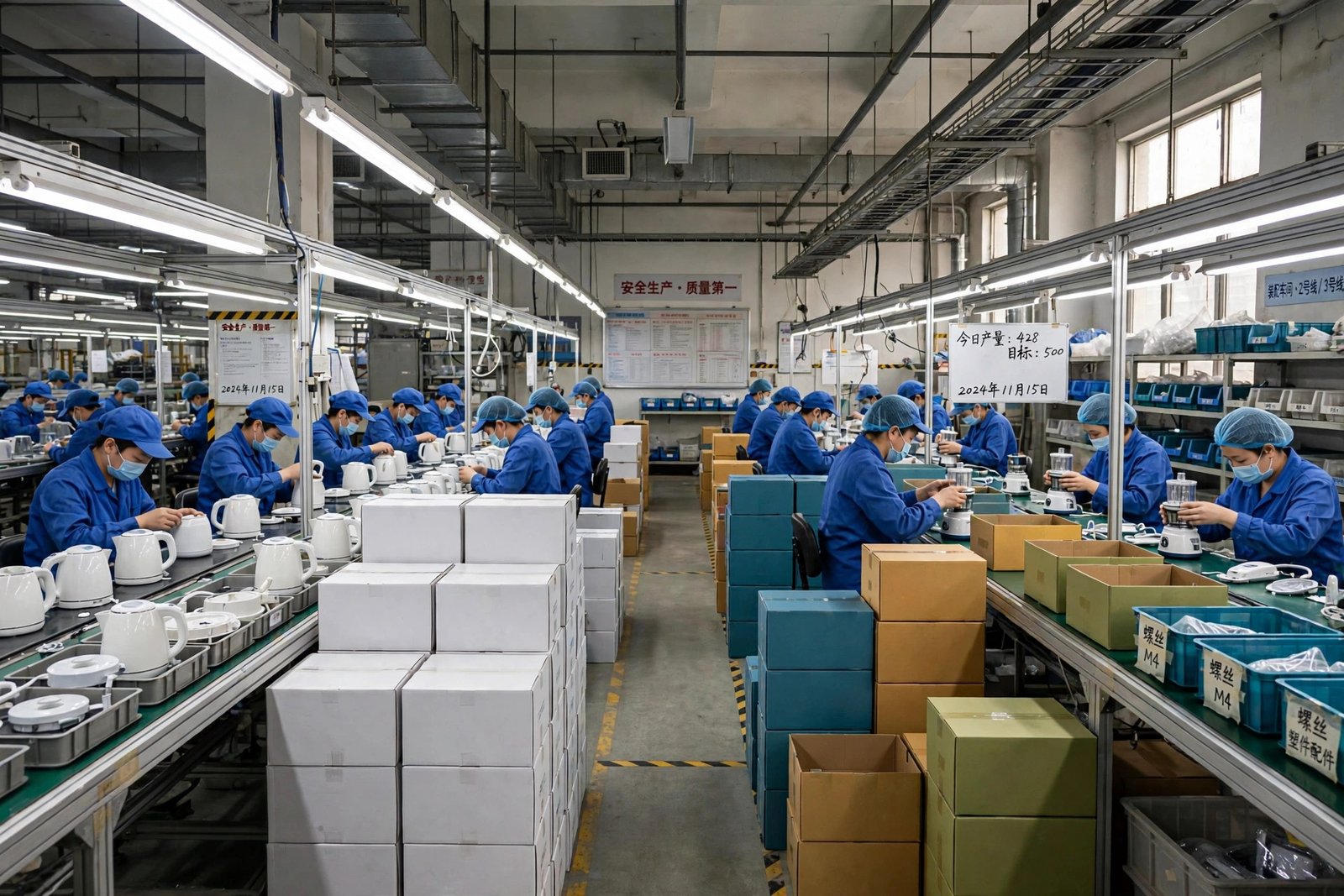
The factory tour was going perfectly — until we turned a corner and saw it. A competitor's product, sitting on the next line over. Same workers. Same machines. Our client's design details, six months from now, in someone else's box.
A brand flies to Guangdong to meet their factory. Line three is their product, running beautifully. Then line four: a competitor's product, unmistakable, rolling off the same floor. The sales manager smiles and says, "We make for many brands." The founder goes very quiet.
That silence is the sound of a founder realizing something nobody told them: the factory was never theirs. It was shared all along.
Factories survive on utilization. One brand's orders never fill a factory for twelve months a year — there are slow seasons, gap weeks, half-empty lines. So the factory fills the gaps with your competitors. It's not personal. It's arithmetic.
Expecting exclusivity from a factory you don't own is like expecting loyalty from a landlord. You're a tenant. A good tenant, maybe the best tenant — but the building has other units, and some of them are rented to your rivals.
1. Your innovations leak. Not theft — osmosis. A tooling tweak that solved your rattle problem. A process change that cut your defect rate. Workers rotate between lines, engineers share what works, and your hard-won improvements quietly become the factory's "standard process." Six months later, your competitor's product has your fix.
2. You lose priority. When both of you need capacity for the holiday run, the bigger order wins. Guess who that usually is. Your launch timeline is now hostage to someone else's purchase order.
3. Your differentiation erodes. The factory learns what sells from you — the features customers love, the finishes that test well — and offers them to the next client as options. You did the R&D. They get the catalog.
Sign the NDA — but don't worship it. It's worth something, not everything. Cross-border enforcement is slow and expensive. Sign it anyway; it sets the tone and gives you a lever.
Own your tooling. The molds, the jigs, the fixtures — if they're yours on paper, they can't quietly become someone else's. (This deserves its own article. It's coming Friday.)
Compartmentalize the crown jewels. Final assembly, firmware, a key component — keep the part that makes you you somewhere else. The factory gets a great product to build. They don't get the whole recipe.
Be the customer they can't lose. Volume, prompt payment, clear specs, low drama. Factories protect their best customers first — make sure that's you, not the competitor.
Visit. Look around. The factory tour isn't a formality. It's reconnaissance. Know what's on the floor, who's on the lines, and what changed since last time.
"Who else do you make this product category for?" Ask it directly, early, and watch the reaction. A good factory answers plainly — it's normal business, and they know how to manage it. A bad one deflects, minimizes, or lies. The deflection is the answer.
You can't stop your factory from serving competitors. But you can choose a factory that manages it professionally — and you can structure the relationship so your innovations stay yours.
Should I demand exclusivity?
You can ask, but you'll pay for it — higher prices, bigger MOQs, or both. For most brands, exclusivity costs more than the risk it removes. Better to spend that money on tooling ownership and compartmentalization.
How do I know if my design is being copied?
Watch the market, especially 6–12 months after your launch. Use distinct, owned tooling so copies are visibly yours. And keep a dated paper trail of your design decisions — it matters if you ever need it.
Is it legal for my factory to serve my competitor?
Generally, yes. A factory can take any client it wants unless your contract says otherwise. Your protection isn't the law — it's contracts, tooling ownership, and keeping the critical pieces out of their hands.
Worried about who else is on your factory's floor? We'll vet your factory's client list and lock down your IP before you commit — so your innovations stay yours.
