8 November 2026 · Bearsource
The factories are the easy part of a sourcing trip. What trips up first-time buyers is everything around them: China runs on payments, trains, apps and connectivity that all assume you set them up before you land. Set them up at home and the country is remarkably easy to work in. Wing it at the airport and you will spend your first two days solving logistics instead of looking at production lines. This is the exact setup we give buyers before their first trip — including the app folder on our own phones.
We are two Asian-American partners, and before our first working trips we assumed China would be easy for us — same look, some language, family roots in the region. It wasn't. The systems in this guide caught us like any other foreigner, because China's friction is procedural, not cultural. So read this as advice, not warning: China is safe, welcoming and remarkably efficient once you are set up, and nearly every item below is a setup problem with a known fix — most of them handled before you board.
Check your passport before anything else. China requires at least six months' validity when you apply for the visa, plus blank pages for visa and stamps. If you are inside six months, renew first and apply on the new passport — then travel on that same one, because train tickets, hotel registrations and factory gate passes all tie to its number.
A sourcing trip is business: factory visits, supplier meetings, a trade fair. That is the M visa (business), not the L tourist visa. The paperwork is light but it is real paperwork: you will need an invitation letter, which a factory you are visiting — or the Canton Fair organizer — can issue, and you should apply at your Chinese consulate or visa centre one to two months before you fly. Repeat business visitors are often granted multiple-entry M visas, which makes the second trip much simpler.
You will read about the 240-hour visa-free transit policy, expanded nationwide on 17 December 2024. It is genuine — citizens of 55 countries, including the US, Canada, the UK, EU states, Australia, Japan and South Korea, can stay up to 10 days without a visa, entering through 65 ports across 24 provinces. But read the mechanism: it is a transit policy. You must be travelling from country A through China to a third country or region B — Hong Kong, Macao and Taiwan count as third regions — with a confirmed onward ticket, and your passport needs at least three months of validity. A normal sourcing trip is a round trip, A to China and back to A, and that does not qualify. Unless your itinerary genuinely routes onward to a third place, plan on the M visa and treat the transit policy as what it is: useful for a stopover, not a sourcing strategy. Rules change, so check the official National Immigration Administration list before relying on any of this.
Departure day deserves the same setup. Pre-book the ride to the airport — an Uber or Lyft reserved the day before, not requested at 5 a.m. with a suitcase in your hand — and be at the terminal three hours before an international departure. If you make this trip more than once, Global Entry is worth the application: it includes TSA PreCheck, so you get the fast lane out and the fast lane back in. And before you buy an expensive coffee at the gate, check whether your credit card already includes lounge access — many travel cards do, through the Amex lounge collection or Priority Pass.
Understand this before anything else: on a local Chinese connection — hotel Wi-Fi or a local SIM — Google, Gmail, WhatsApp, Google Maps and most Western apps simply do not load. They are blocked, not broken. There are exactly two ways a business traveller stays reachable:
Our own setup, and the first two apps in the "Travel China" folder on our phones: an eSIM as the everyday connection, and a VPN — plus a second backup VPN — for hotel Wi-Fi. Hotel Wi-Fi itself is fast, but it is a local connection in every sense: the firewall applies, and sign-in pages sometimes expect a Chinese mobile number. Treat it as a bonus pipe, never your only one. One coordination point: suppliers' export staff and your home team probably talk on WhatsApp. Agree before the trip that once you land, WeChat is the channel — it is the one app that works everywhere in China, for everyone.
China is effectively cashless. Street stalls, taxis, metro gates, factory-district restaurants — payment is a QR code scan. Foreign bank cards are rarely accepted directly outside big hotels and airport shops, so do not plan to tap your way around.
Set up both Alipay and WeChat Pay before you leave home. Both now link foreign Visa and Mastercard (and several other international card networks), and both require passport identity verification inside the app — do that at home, where verification codes and support are easy. The fee structure for foreign cards: transactions of ¥200 or less are fee-free; above ¥200 a 3% service fee applies to the full amount. People's Bank of China limits for foreign-card users are US$5,000 per transaction and US$50,000 per year — far above anything a sourcing trip needs. Note that a foreign card funds purchases only: you cannot send transfers or red packets with it, which matters if a supplier suggests paying a sample fee by personal transfer. Carry ¥1,000–2,000 in cash as a dead-phone backup, and break the big notes at your hotel.
And these two apps are bigger than payment. Alipay and WeChat are super apps: one login runs daily life through built-in mini-programs, with nothing extra to download. From inside Alipay you can hail a DiDi, generate a metro or bus transit code, book trains and flights, order food to your hotel, and scan-and-translate a menu; WeChat does the same while also being your messaging channel with every supplier. That is why you set up both before the trip — each covers gaps the other leaves, and some merchants and transit cities clearly favour one.
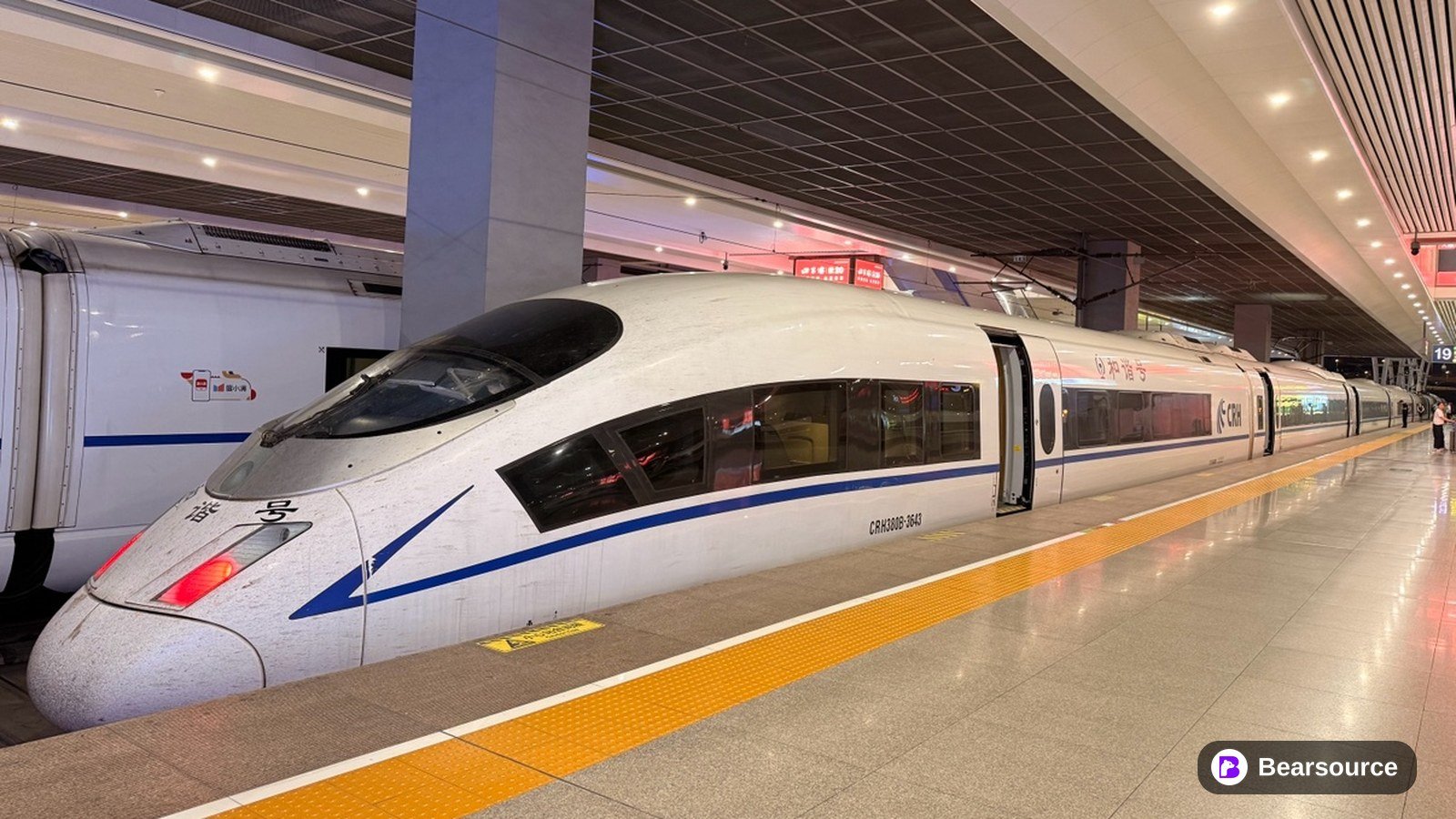
The high-speed rail network is how you work a multi-city trip. Guangzhou to Shenzhen takes about half an hour, Shanghai to Suzhou under half an hour — factory clusters that look far apart on a map are commutes. Tickets are real-name and tied to your passport: you enter the gate with the passport itself, and foreign passports usually go through the staffed lane, so keep it in your hand, not your luggage. Stations are airport-sized and ticket gates close about five minutes before departure — arrive 30 to 45 minutes early, every time.
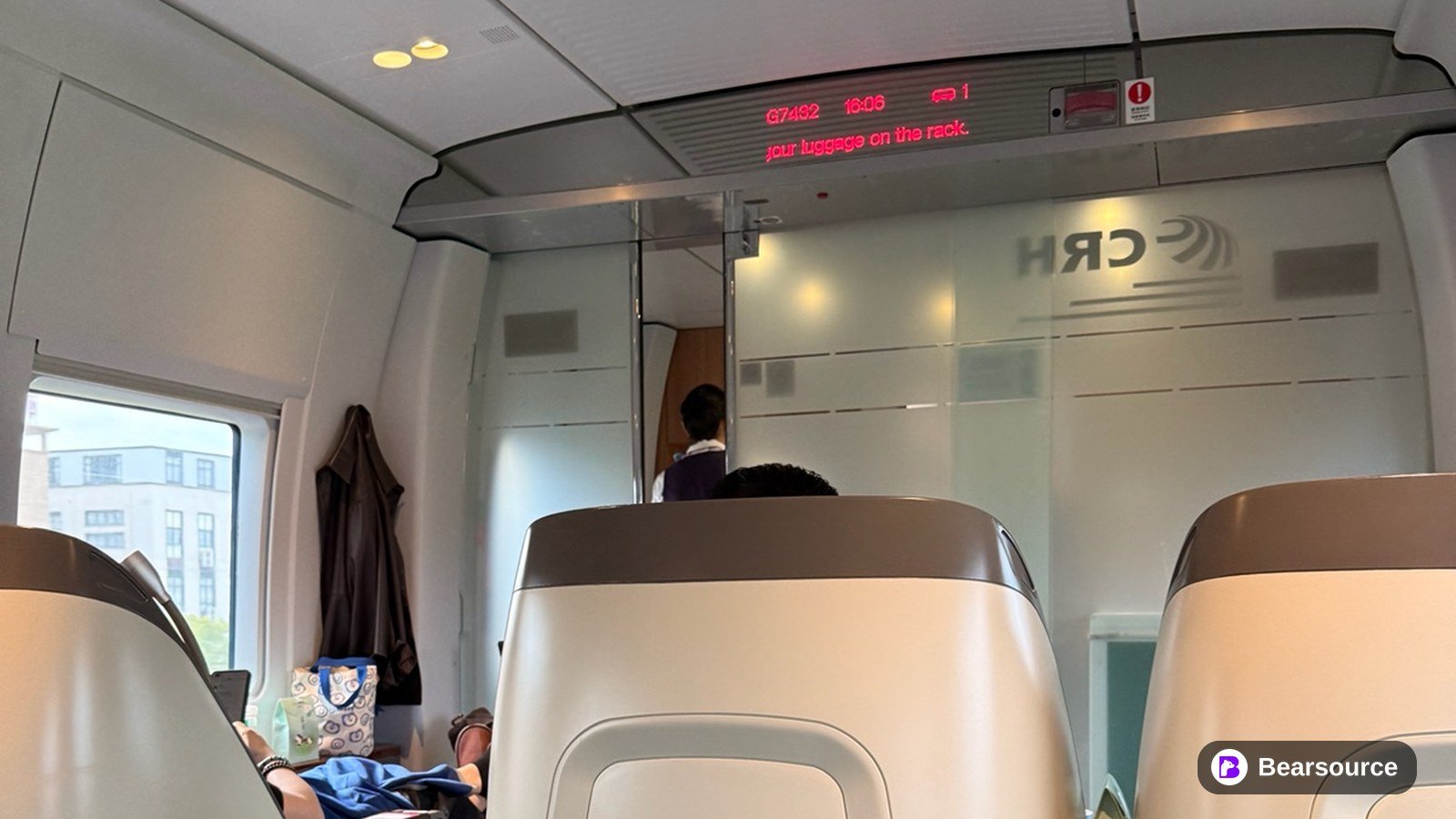
The trains leave on time — in our experience, to the minute. On any leg under about four hours, the train beats flying door-to-door: no trek to a distant airport, no security-queue drama, and none of the long, routine delays that are normal on Chinese domestic flights. If the budget allows, book business class on the longer legs: the pod seats in the photo recline nearly flat, the cabin stays quiet, and you step off able to work. First class is the sensible middle; second class is fine under two hours.
Learn to read the train number — most foreigners never do. The letter tells you what you're boarding: G, the true bullet train, up to 300–350 km/h (the G7492 in our cabin photo); D, a fast EMU, a step slower, 200–250 km/h; C, short intercity hops; Z, T and K, older conventional trains — avoid those for work trips. Two trains, same departure time? Check the letter: G and D on one route can differ by an hour.
Two train apps live in our folder, because each covers the other's weakness. Railway 12306 is the official system: full inventory, easy changes, and a one-time passport verification. Trip.com is easier in English and takes foreign cards without a fight — book there if 12306 fights back. For domestic flights on the long legs, we manage itineraries in Ctrip (携程) and Umetrip (航旅纵横), which track check-in, delays and gate changes in real time.
Inside a city, use DiDi — China's Uber. The standalone DiDi China app works with foreign numbers and cards, but the most reliable route for foreigners is the DiDi mini-program inside Alipay: it reuses the identity and card you already verified. Two habits make it work: save every hotel and factory address in Chinese characters in your notes app, and let the driver navigate — drivers run on Amap (高德), which is also the map app in our folder, with Baidu Maps as the second source. Google Maps is unreliable in China: outdated data behind the same blocked services. At airports, ignore anyone offering a ride in the arrivals hall — use the official taxi queue or DiDi. The metros in Guangzhou, Shanghai and every major city are extensive, cheap and signed in English; pay with the Alipay transport code.
Book through Trip.com or Ctrip: the inventory includes good hotels near industrial districts that never list on Western platforms. And location is a working decision — stay near your factory district or the high-speed rail station, not the scenic downtown. Your days start at a factory gate at 8 a.m., not at the sights; a pretty address costs you an hour each way. For trip one, book a US or European chain where possible — Marriott, Hilton, IHG, Accor: the desk knows foreign guests, English works, breakfast is familiar, registration runs smoothly. Chinese chains are often better value; save them for trip two — trip one is about removing friction, not collecting adventures.
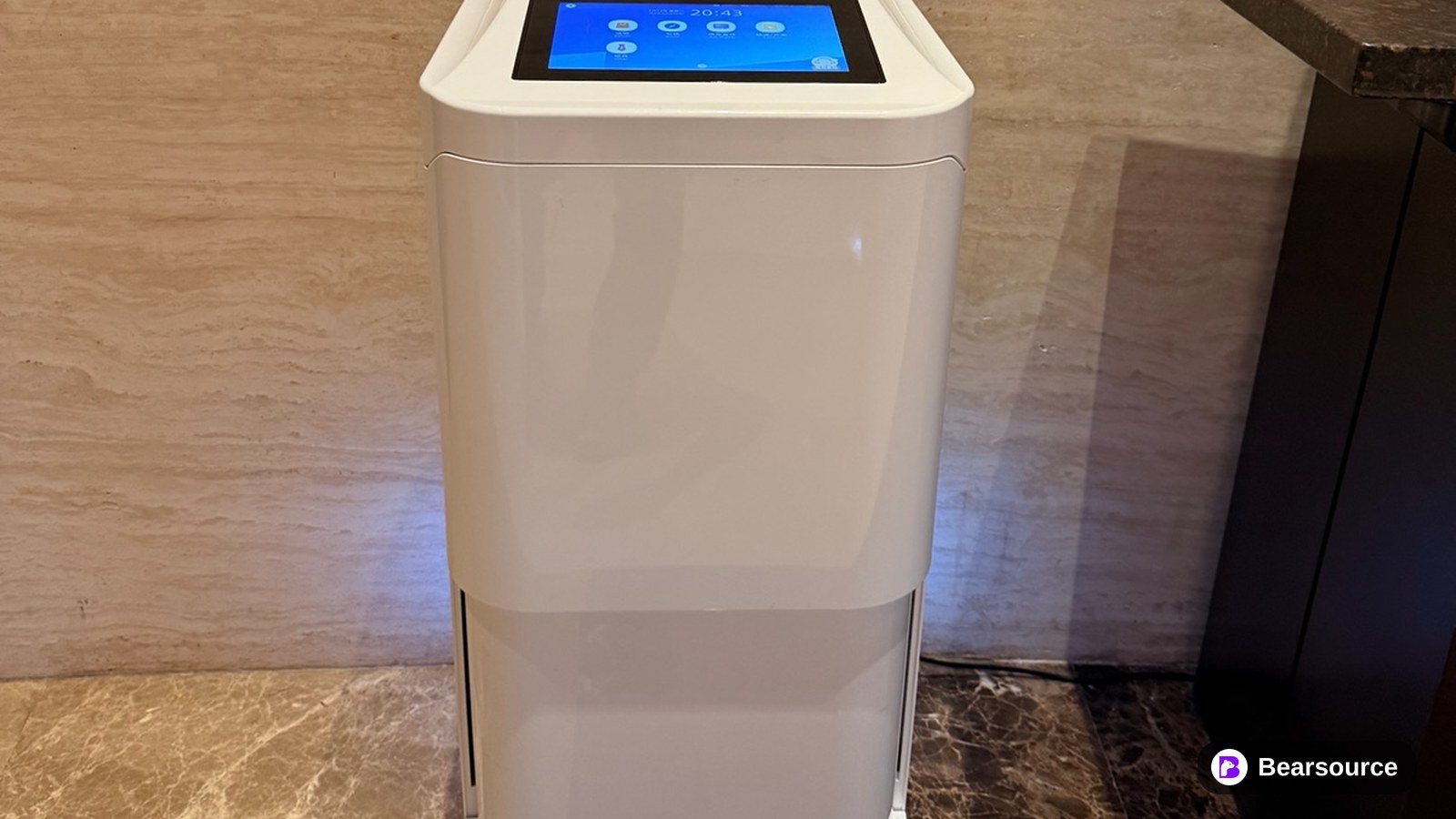
Check-in has one non-negotiable: your physical passport. The hotel is required to register foreign guests with the local police, which is what the front-desk scan is doing — keep the passport handy, and expect a deposit hold on your card. Then enjoy the part of Chinese hotels foreigners genuinely love: order dinner on Meituan and a small white robot rides the lift and brings it to your door. First-timers photograph it; by day three it is just how dinner works. Breakfast buffets start early and run big — eat properly before factory days, because lunch is whenever the factory says it is. Laundry is fast and cheap, usually next-day, so pack light and wash mid-trip. Before you leave the desk, take the hotel's name-and-address card in Chinese: it is your get-home card for any taxi or DiDi driver.
Plan the weather per city, too. China is continent-sized: check the forecast for each stop on your route, not for "China". The same week can mean a humid 30°C in Guangzhou and near-freezing in Beijing, so pack layers — and rain gear for the south. In typhoon season on the southern coast, roughly June to October, weather actually cancels flights and coastal trains; that is what your buffer day is for. And the winter trap: south of the Yangtze, many buildings, factories included, have no central heating — a January factory floor can feel colder inside than out. The warm jacket goes to the factory too. When the route runs hot, pack light: breathable layers you can rinse and re-wear — hotel laundry in China is fast and cheap, often back the same evening — so half the clothes and one wash beats dragging a heavy case through airport-sized stations in 35°C humidity.
Sockets are the easy part. Chinese wall sockets are multi-standard — most accept US-style two-pin plugs, alongside the local Type A/C/I patterns — and power is 220V, which every modern phone and laptop charger handles. Check anything with a heating element before plugging it in.
The trap is your power bank. Since 28 June 2025, China's aviation authority bans power banks without a clearly printed CCC (3C) certification mark from domestic flights inside mainland China — no mark, and it is taken at security. Most power banks bought in the US or Europe do not carry the mark. The capacity rules did not change (up to 100Wh is fine; 100–160Wh needs airline approval, maximum two; above 160Wh is banned, and power banks are carry-on only, never checked baggage). Practical answer: leave the Western power bank at home, and if you need one for domestic legs, buy a CCC-marked one in China — they are sold everywhere, cheaply.
China is generally very safe for business travellers — violent crime against foreigners is rare and big cities feel calm late at night. The real risks are smaller and dumber. The classic scams run near tourist spots: the friendly English-speaking "art student" or tea-house invitation that ends with a wildly inflated bill, and unofficial taxis at airports quoting a flat "special price" — use the official taxi queue or DiDi and you will never meet either. Traffic deserves more respect than crime: cross defensively, and assume the silent e-bike is coming. On bad air days — northern cities in winter especially — a KN95 mask and a glance at the air-quality index in your weather app are enough. Save two things in your phone: the police emergency number, 110, and a photo of your hotel's Chinese address card, kept separate from the passport itself.
Pack your own small medicine kit, even though pharmacies are on every corner — labels are in Chinese and the brands are not the ones you know. Ours covers the three trip-wreckers: melatonin for sleep, taken at destination bedtime for the first two or three nights to reset against jet lag; stomach basics — an antacid, anti-diarrhoea tablets and electrolyte sachets, because new food on a banquet schedule is the usual trigger; and a pain and fever reliever you already trust. Add any personal prescriptions in their original packaging, with a photo of the prescription on your phone. All of it travels in your carry-on, never in checked luggage. Add one full change of clothes to that carry-on, too: if the checked bag misses a connection, you can still walk into your first morning presentable while the airline finds it.
Find food the way locals do: Dianping (大众点评) for reviews and rankings, Meituan (美团) for delivery and deals — both are in our folder and both work fine with a translation app open beside them. Near a factory, the best intelligence is simpler: ask where the factory's own team eats lunch.
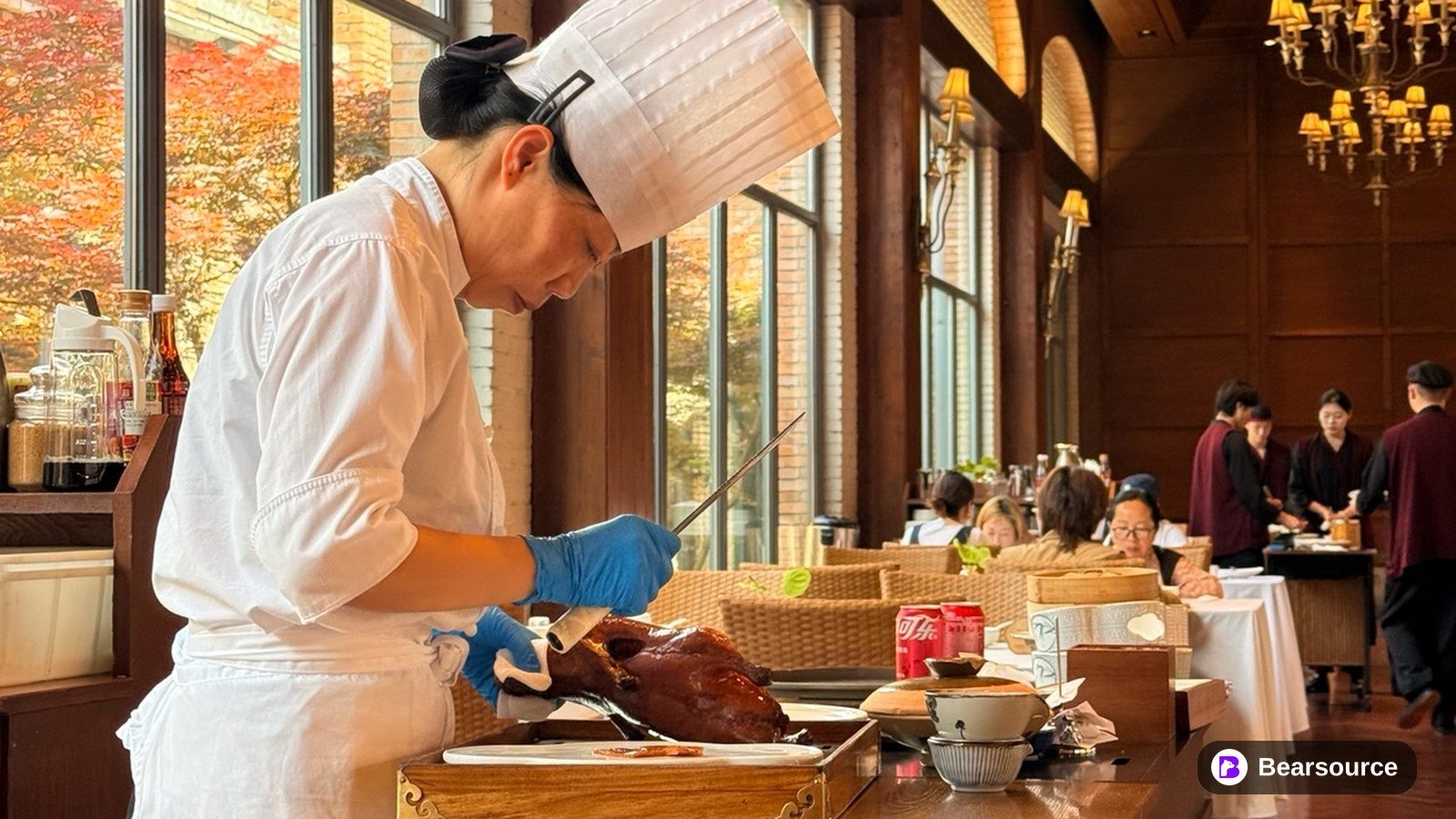
A working trip has a food rhythm. Quick hotel breakfast, then a hosted factory lunch — and here the rule is relationship, not cuisine: eat what is offered. The factory is showing respect, and trying a little of everything is read the way a firm handshake is. Dinner is often a group affair where the host orders for the table; tea is the default toast, and if baijiu appears, a small toast is polite but declining gracefully — "I'll toast with tea" — is completely fine. Give yourself one regional anchor per city when the schedule allows: Peking duck carved at your table in Beijing, morning dim sum in Guangzhou. Those meals are the trip's memory.
Water has one rule with no exceptions: tap water in China is not for drinking — bottled or boiled only. Hotels restock bottled water daily, and ice in reputable hotels and restaurants is made from purified water and is generally fine. Apply the busy rule everywhere: a full, fast-turning kitchen is the best food-safety signal there is.
And run your own buffer. Factory days run long, and meals land when the meeting ends — not when you are hungry. Carry a few protein bars or snacks in the day bag, and always a bottle of water in hand: bottled only, per the rule above, picked up at the hotel or any convenience store — never set out empty. Staying hydrated matters doubly on the first day or two, while jet lag is still doing its work.
Plan the landing, not just the meetings. We aim to arrive on a Sunday morning local time — Saturday if we want a day to rest and walk around first — and we never put a factory on arrival day. The weekend landing is working time of a different kind: reset your sleep, get your bearings, let the jet lag burn off. Then Monday morning you walk into the first factory fully ready, and the days that follow run at full strength.
Four habits separate buyers who get value from a trip from tourists with factory photos. First, WeChat is the follow-up channel: add every supplier contact the same day you meet them, while names and faces are fresh, and send a short thank-you that evening. Second, carry your passport on factory days — you need it for hotel check-in and for factory gate registration alike. Third, ship samples home through your forwarder or a courier instead of gambling on overweight luggage; photograph and label every sample with the factory's name and the date before it goes into the box. Fourth, keep one buffer day before you fly home with nothing critical scheduled: meetings move, trains get missed, and that empty day is what absorbs it.
0 of 7 basic checks ready
Basics done ✈️ — the complete planner has the rest
Take the complete planner with you. The complete interactive China Sourcing Trip Planner — all 18 trip checks with notes, your own days and cities with train suggestions, all 8 train routes and 15 field tips — delivered by email.
A sourcing trip works better with someone already on the ground. As a production-management partner, we plan factory routes around your product, sit in the meetings with you, run QC while production runs, and manage shipment — from idea to shipment, not just introductions. You bring the product. We bring the ground game.
