1 October 2026 · Bearsource
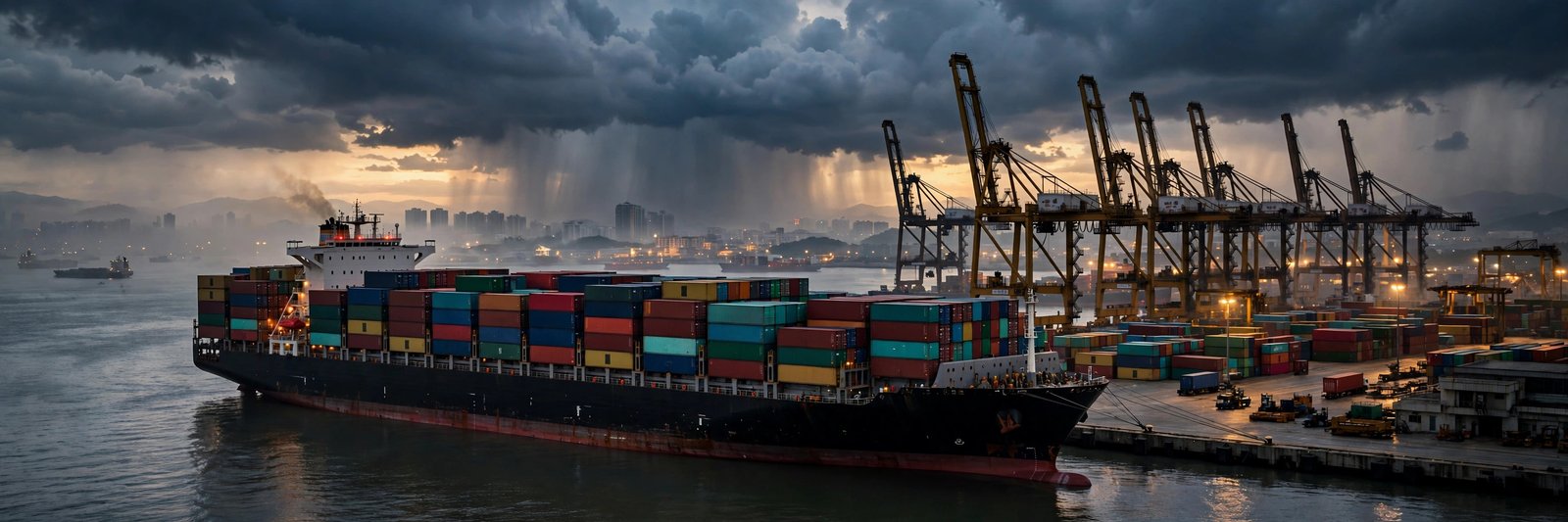
Every importer knows the feeling: a tracking page frozen for nine days, a factory contact gone quiet, a customer asking where their inventory is. Here's the uncomfortable truth — most shipment delays from China aren't bad luck. They're calendar events, visible a year in advance, that buyers either plan around or pay for. This is the 2027 calendar, the real disruption window behind each date, and the buffer math that keeps you shipping on time.
China shipment delays come in two flavors. Predictable ones — holidays — happen on fixed dates, and getting burned by them is a planning failure. Unpredictable ones — typhoons, port congestion — can't be dated, but they can be buffered. The importers who ship on time aren't lucky. They treat the official holiday as the middle of the disruption, not the whole of it, and they price buffer days into every commitment like insurance.
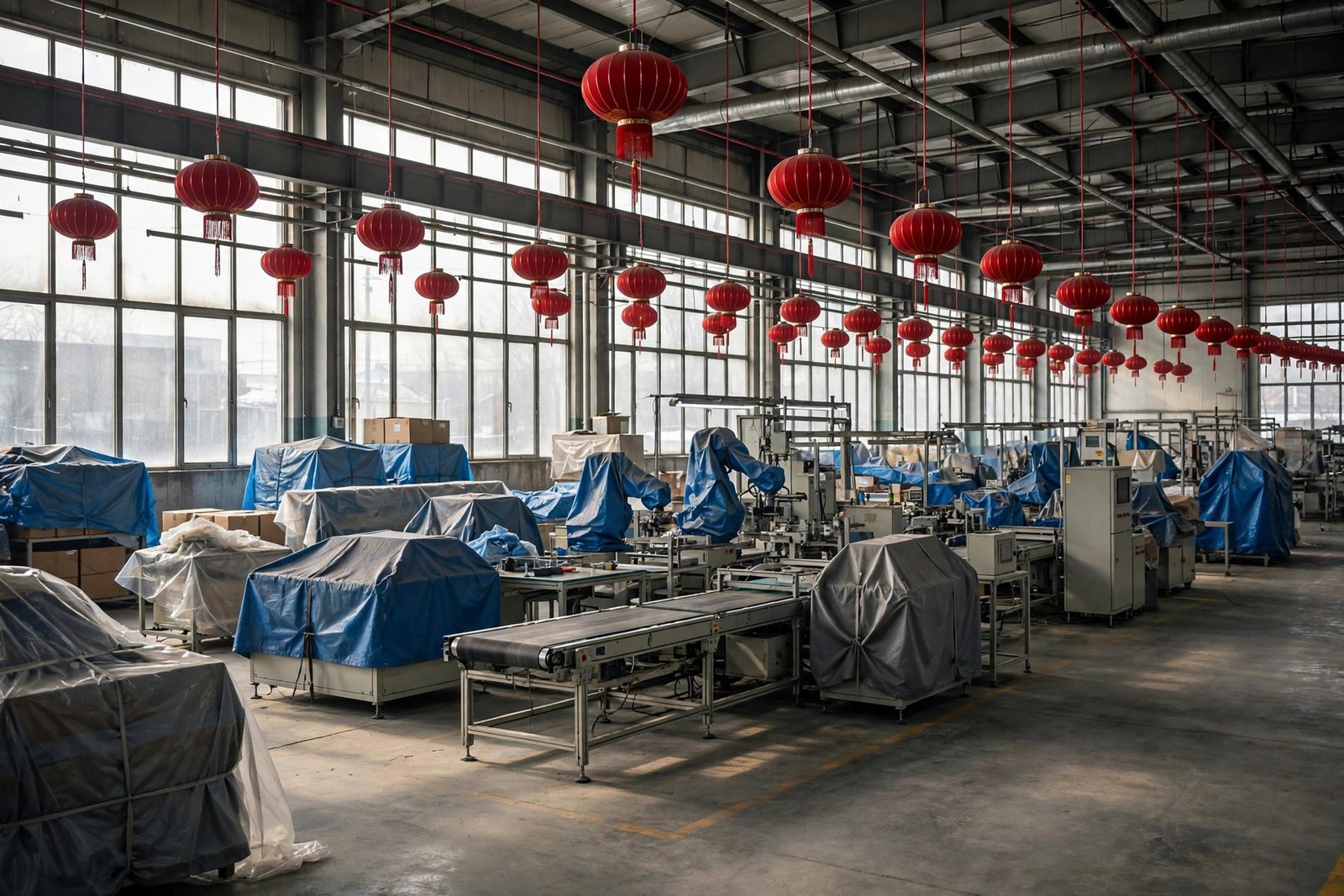
Chinese New Year falls on February 6, 2027 (Year of the Sheep), with the official break running roughly February 5–11. If you plan around those dates, you'll be late. The real disruption runs six to eight weeks, in three phases:
Translation: if you need goods in Q1 2027, production must be finished by early January. Orders placed in December are already gambling. The buyers who survive CNY place their final pre-holiday orders in October or November — which means if you're reading this in October 2026, the clock is already ticking.
National Day Golden Week runs October 1–7, 2027. Shorter than CNY, but it hits at the worst possible moment — right when Western brands are building holiday-season inventory. Factories close for the full week, ports clog in the pre-holiday rush, and the backlog adds 10–15 days to normal timelines. If your Christmas inventory isn't on the water by mid-September, you're negotiating with a calendar that doesn't negotiate back.
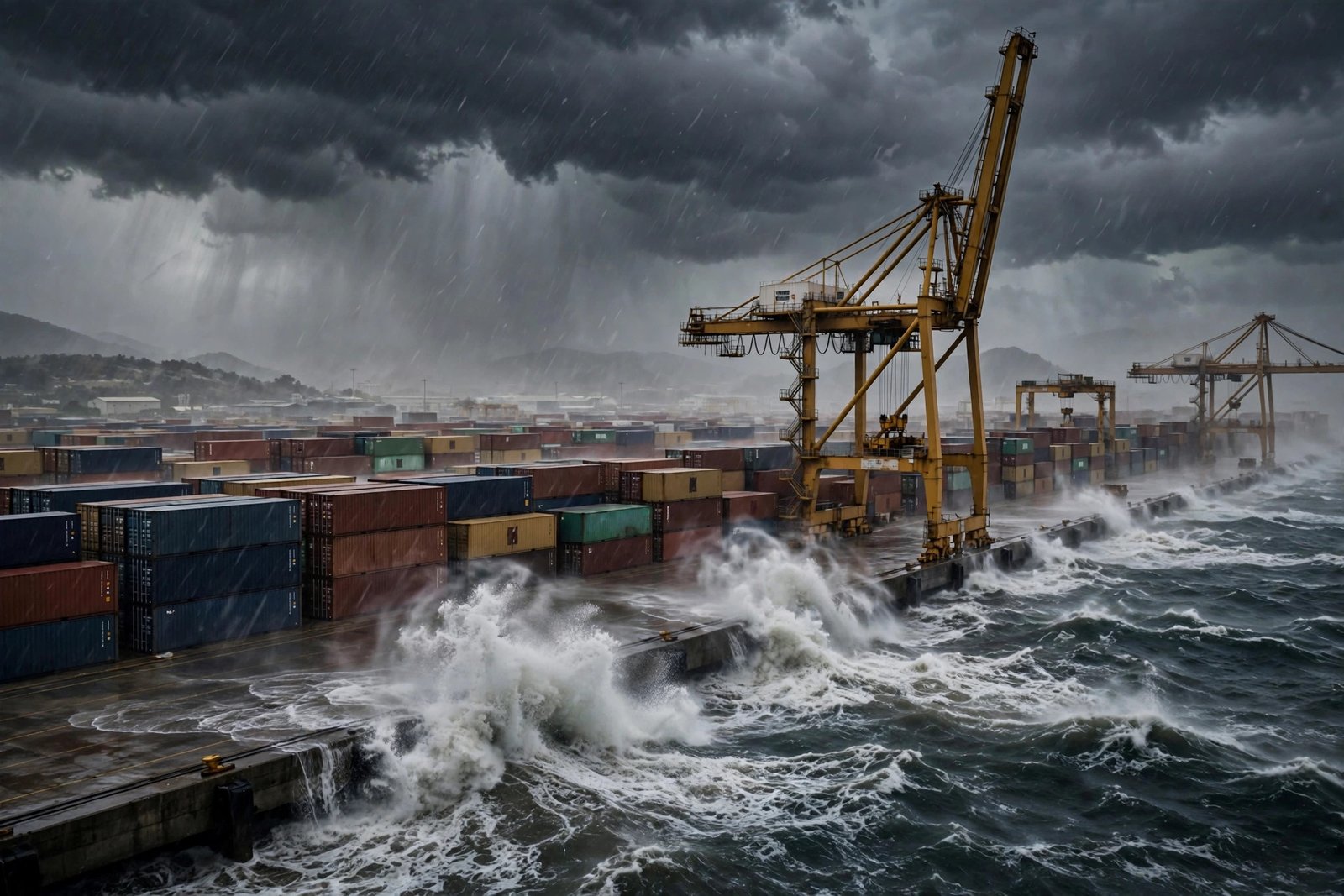
You can't schedule around typhoons, but you can respect the season. The summer of 2026 was a brutal reminder: five tropical cyclones — Maysak, Bavi, Noul, Dolphin, and Saudel — hammered China's coast. Shanghai and Ningbo, the two busiest container ports on earth, saw schedule reliability collapse to 12–17%, with vessels arriving 8–9 days late. Across the industry, average vessel delays hit 6.8 days, and some 3 million TEU of shipping capacity — 8.5% of the global fleet — was swallowed by port congestion.
What this means for 2027 planning:
These don't shut down the country, but each one costs you 3–7 days once you count the slowdown around it. Mark them all:
Individually they're speed bumps. Stack two of them inside a 60-day production window and they become a wall.
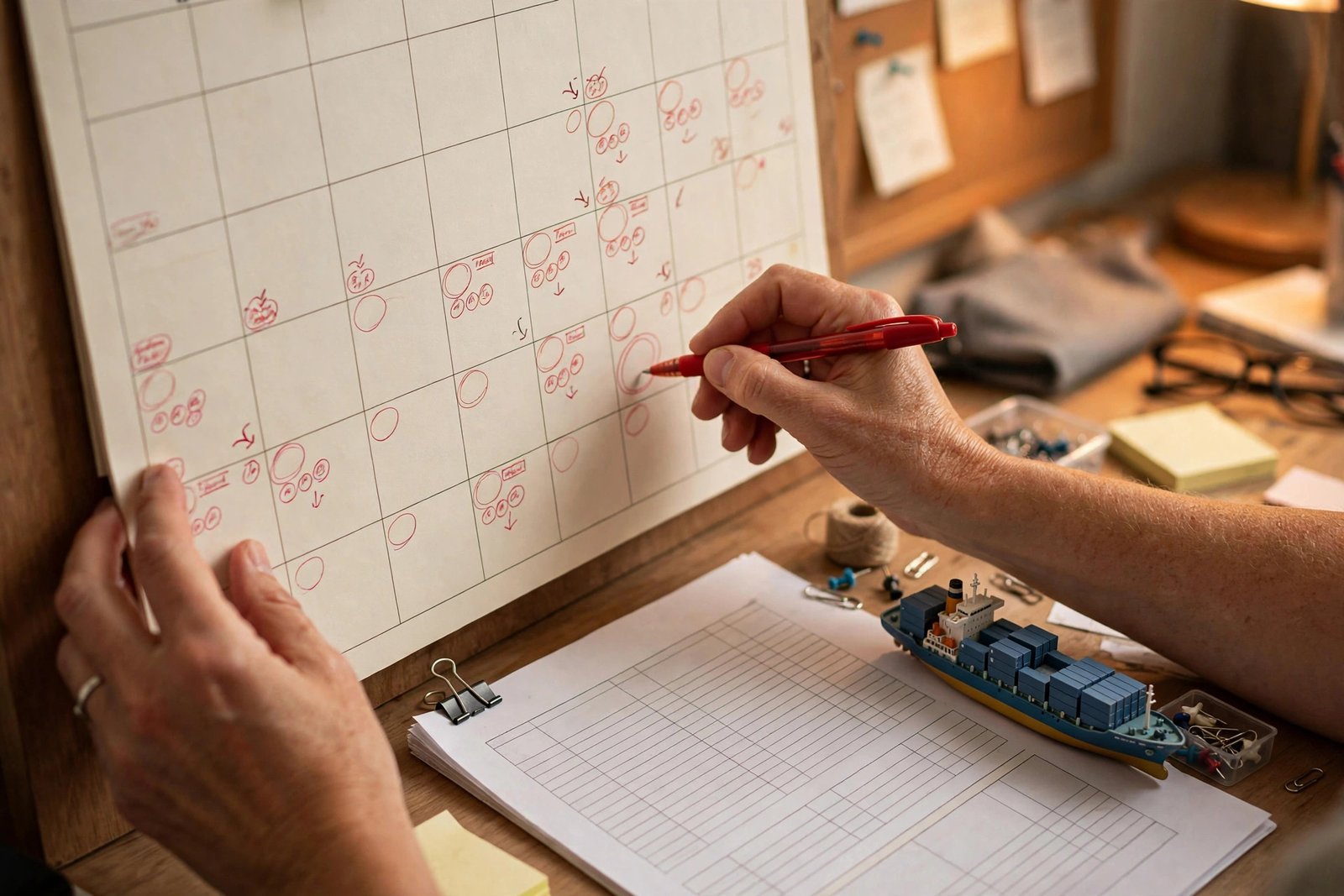
Here's the formula we use on every production plan. Start from the date your goods must arrive, and subtract:
Worked example: you need goods in Los Angeles by March 15, 2027. Subtract 30 days transit + 7 customs/drayage + 21 days CNY buffer + 45 days production (+20%) + 10 days inspection = your order needs to be placed around early November 2026. That's not conservative. That's the math.
How early should I place orders before Chinese New Year 2027?
Production should be finished by early January 2027, which means placing orders in October–November 2026. If you're ordering in December, build air-freight money into your budget — you'll likely need it.
Do all factories close for the full CNY break?
Most close 2–4 weeks in practice. Small workshops sometimes stay shut longer; large manufacturers sometimes reopen lines earlier but run short-staffed. Nobody runs at full capacity in February.
How long do typhoon delays actually last?
The port closure itself is usually 1–3 days, but the cascade — rolled sailings, vessel bunching, yard congestion — adds 3–10 days to schedules, with knock-on effects for another 1–2 weeks after a major storm.
Is air freight worth it during the CNY crunch?
For covering a gap, yes — air-freighting the 20% of inventory you need immediately while the rest goes by sea is often the smartest money in logistics. Air-freighting everything in panic is how margins die.
Can a sourcing agent actually prevent these delays?
Prevent, no — nobody controls the weather or the national holiday schedule. But this is exactly what production management is: someone who builds the calendar into your plan in October instead of discovering it in February, and someone on the ground to escalate when a delay hits. That's the job.
Facts verified 1 October 2026. Bearsource is a sourcing and production management company, not a legal or trade-compliance advisor. Holiday schedules, port conditions, and freight markets change — confirm current conditions before acting.
Tired of planning your inventory around China's holiday calendar? That's literally what we do — production timelines with the buffers built in, and people on the ground when something slips. Tell us what you're making.
Start a project